






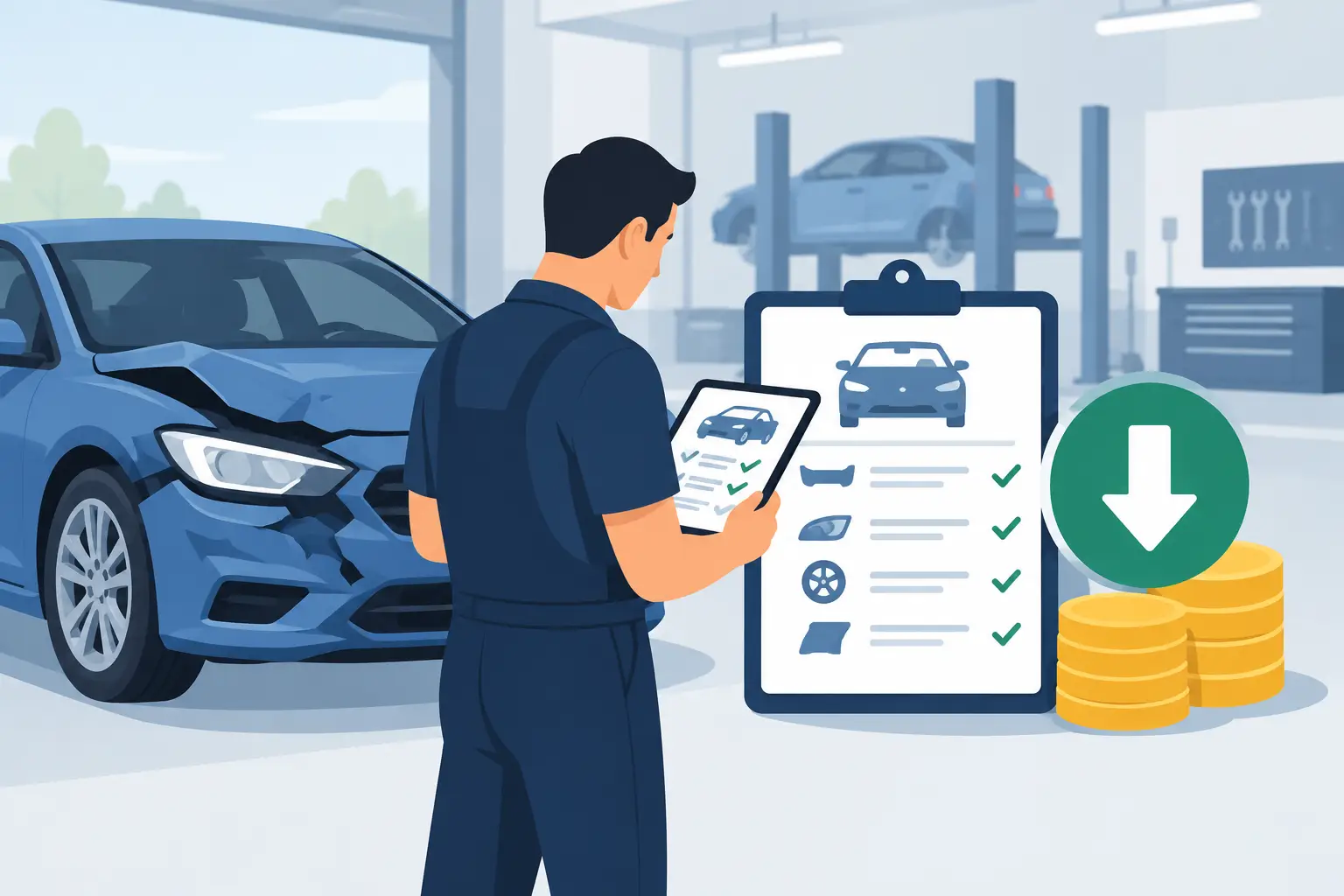




A collision center can have full stalls, a booked-out schedule, and technicians working overtime while still producing too few completed repairs. That is the central operating problem behind how to improve collision repair throughput: increasing the rate of quality deliveries, not simply increasing activity inside the shop.
For independent operators and multi-shop organizations, throughput is now a margin, capacity, and insurer-performance issue. Rising vehicle complexity, parts volatility, calibration requirements, and persistent technician constraints have made the traditional response – add more work and push harder – less reliable. The more durable approach is to identify where repair orders stop moving, then redesign the process around those constraints.
Throughput Starts With Flow, Not Shop Busyness
Throughput is the number of repair orders a facility completes to required quality standards over a defined period. Cycle time matters, but it is not the same measurement. A shop can reduce cycle time on selected drivable repairs while allowing a growing population of stalled, parts-pending jobs to consume floor space and management attention.
The practical objective is controlled work in process, or WIP. Every repair in the building should have a known status, a next action, an owner, and a realistic path to completion. Vehicles that do not meet that standard are not merely delayed files. They are inventory consuming production capacity.
Many collision centers carry too much WIP because intake capacity is treated as success. A packed lot can look productive to an owner or insurer partner, but excessive WIP creates search time, parking moves, repeated customer calls, parts confusion, and hidden rework. It also makes daily production meetings less useful because the team is reviewing too many exceptions rather than managing a manageable production plan.
A useful operating question is not, “How many cars can we take in?” It is, “How many cars can we move through each production stage without interruption?” The answer should shape appointment scheduling, staffing, parts purchasing, and sublet planning.
Build a Repair Plan Before the Vehicle Enters Production
The highest-leverage throughput improvements often occur before teardown is complete. Blueprinting is not an administrative task for estimators. It is the process that determines whether the repair enters production with a complete scope, ordered parts, identified operations, and a documented diagnostic and calibration plan.
A disciplined blueprint should establish repair versus replace decisions, hidden damage, structural and corrosion-protection requirements, OEM procedure dependencies, scan requirements, ADAS calibration needs, sublet work, and likely insurer supplements. It should also identify parts with long lead times, dealer-only sourcing, or uncertain availability.
No blueprint eliminates every supplement. Late-discovered damage is part of collision repair, particularly on heavily damaged or advanced-technology vehicles. But a shop that routinely finds major operations after parts have arrived is usually dealing with inconsistent disassembly, incomplete procedure research, or a rushed estimate-to-production handoff.
The operational trade-off is clear. More complete front-end planning can add time before a repair is released to production. Yet releasing a vehicle too early creates far more delay downstream. Shops should measure the percentage of repair orders released with all critical parts available and all required operations identified, then compare that figure with touch time, supplement frequency, and delivery performance.
Separate Repairable Work From Parts-Pending Work
A vehicle should not occupy a prime production location simply because it has been checked in. Once a long-lead part is confirmed, move the repair into a defined parts-pending status and protect active production space for jobs that are ready to flow.
This requires candid communication with customers and payers. Promising an early completion date before parts availability is verified may protect a customer-experience metric for a day, but it damages credibility when the date changes twice. A realistic commitment supported by visible milestones is usually more valuable than an optimistic estimate.
Manage the Constraints That Actually Limit Output
Every collision operation has a constraint. It may be a body technician with structural capability, a paint booth, a prep deck, a frame-measuring bay, an estimator authorized to negotiate supplements, or an outside calibration provider. The constraint should receive the most reliable scheduling, material support, and management attention.
A common mistake is balancing labor by department without looking at the work mix. A shop may have enough total body labor but insufficient aluminum, structural, welding, or advanced electrical capability for the vehicles currently in queue. Similarly, a refinish department may appear fully staffed while the booth becomes the true bottleneck because too many jobs arrive at prep in a late-day surge.
Daily production management should therefore focus on constraint protection. Schedule work so the constrained resource has a ready queue. Confirm parts, procedures, authorizations, and adjacent labor before the job reaches that point. If the booth is the constraint, the goal is not to keep every technician equally busy at every hour. The goal is to avoid a booth sitting idle because a vehicle is waiting on final masking, a color decision, or a missing blend panel.
For multi-shop operators, this analysis can also inform network routing. A location with available general body capacity may not be the best destination for a repair requiring specialty structural work, an EV isolation process, or in-house calibration. Directing work based on true capability can improve network throughput even if it does not equalize volume by location.
Tighten Parts, Supplements, and Authorization Handoffs
Parts disruption remains one of the most visible sources of lost production time, but the issue is not always supplier performance. Shops frequently lose days through duplicate orders, incomplete receiving, unverified alternative parts, damaged components discovered too late, or parts that arrive before a supplement is approved.
The parts function needs a production-facing cadence. Every critical part should be tied to a repair plan, delivery commitment, inspection status, and expected installation date. Receiving should verify the right part, condition, and completeness quickly enough to preserve time for corrective sourcing. A bumper cover found damaged on the day of paint is no longer a parts problem alone. It is a delivery and capacity problem.
Supplements need the same discipline. Establish a trigger for when a supplement is written, submitted, escalated, and followed up. The exact escalation path depends on DRP requirements, carrier relationships, and the severity of the repair. What matters is preventing approved operations from becoming invisible while the vehicle waits.
Digital status tools can help, but they do not fix undefined ownership. Each handoff should answer three questions: what is blocking the repair, who owns the next action, and when will that action be complete? Without that clarity, status boards become a record of delay rather than a management system.
Improve Collision Repair Throughput Without Trading Away Quality
Fast movement through the shop is only beneficial when repairs meet OEM procedures, documentation requirements, and customer expectations. Pushing vehicles into paint before repairs are fully verified, delaying scans to the end of the process, or treating calibration as a final administrative step can create expensive rework and liability exposure.
Quality gates should be placed where defects are cheapest to correct. That generally means documented repair-plan verification before production release, technician self-checks before the next department receives the vehicle, and a final quality-control review that includes required scans, calibrations, warning lamps, fit and finish, and repair documentation. The purpose is not to layer inspections on top of every task. It is to prevent avoidable defects from traveling downstream.
Shops should also distinguish between productive touch time and apparent touch time. A technician walking the lot for a missing clip, waiting for an estimate change, or moving vehicles because of poor staging may be clocked onto a job, but the operation is not gaining output. Observation on the floor often reveals these losses more clearly than a monthly dashboard.
Use Metrics That Change Daily Decisions
Monthly financial results are essential, but they arrive too late to manage a current production bottleneck. Leaders need a smaller set of daily and weekly measures that show whether flow is improving.
Useful measures include active WIP by stage, repair orders awaiting parts or authorization, average days from check-in to blueprint completion, blueprint-to-production release time, touch time, supplement frequency, on-time parts availability, paint booth utilization, and delivered vehicles per production day. Metrics should be segmented where possible by severity, insurer, vehicle age, and propulsion or technology type. A mixed portfolio can hide the fact that late-model ADAS repairs or EV-related work are consuming disproportionate capacity.
Avoid treating any one metric as a universal scorecard. A sharp reduction in WIP may indicate better flow, or it may mean the shop is declining profitable work. Higher touch time can reflect stronger production discipline, or technicians may be carrying time while waiting for decisions. The value comes from reading the metrics together and validating them against what the production team sees.
Make Throughput Improvement a Management Habit
The strongest collision centers do not run one major throughput project and declare victory. They create a recurring management rhythm: review yesterday’s misses, confirm today’s constraint, remove blockers before they reach production, and adjust tomorrow’s schedule based on parts and labor reality.
That rhythm is especially important as repair complexity changes. A process that worked for conventional late-model vehicles may fail when a higher share of repairs requires OEM procedure research, battery safety steps, calibrations, or specialty sublet coordination. The answer is not necessarily more software, more stalls, or more headcount. It is a clearer production system that exposes the next constraint before it becomes a week of lost capacity.
The next vehicle on the schedule is the best place to start. If its repair plan, parts status, approvals, technical requirements, and assigned capability are clear before it enters the shop, the operation has already improved its odds of delivering more work with less friction.