








Market Intelligence
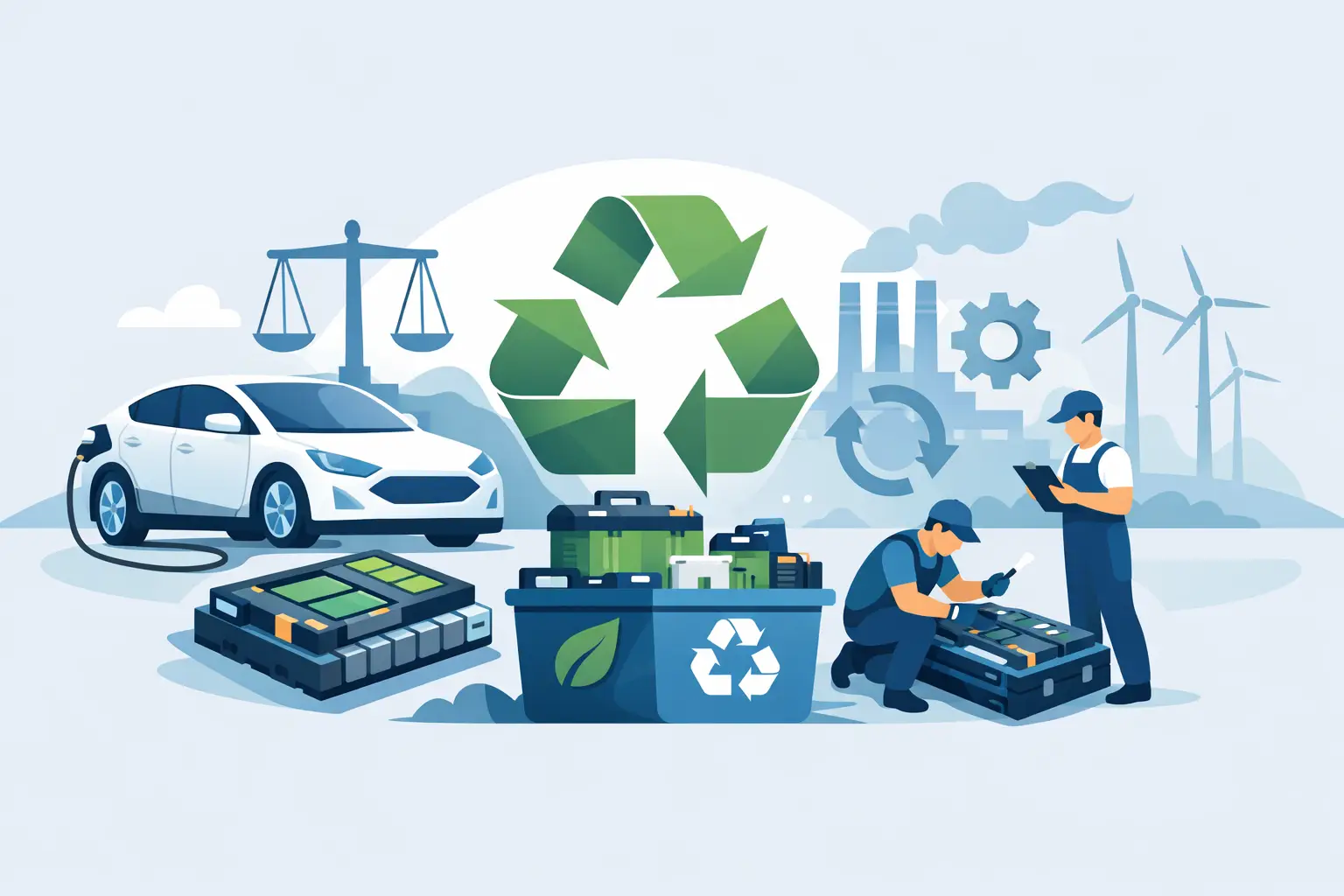
A damaged EV does not become a recycling issue only when it reaches a shredder. For a collision center, insurer, tow operator, salvage auction, or mechanical repair facility, EV battery recycling regulations begin to matter the moment a high-voltage pack is suspected of damage, isolated from the vehicle, or transferred to another party.
That distinction is becoming more consequential as EV repair volume rises and more vehicles enter the total-loss and end-of-life stream. The regulatory environment is still fragmented across federal transportation and environmental rules, state requirements, OEM procedures, and recycler acceptance standards. The practical result is clear: businesses that treat battery disposition as a back-end salvage task risk avoidable storage exposure, transport delays, and disputed costs.
EV Battery Recycling Regulations Reach Beyond Recyclers
The public discussion often centers on whether enough recycling capacity exists to recover lithium, nickel, cobalt, and other materials. That is a real supply-chain question, but automotive service businesses face a more immediate compliance issue: who has custody of a damaged battery, how is its condition documented, and can it move legally and safely to the next handler?
In the United States, a lithium-ion battery or battery pack may be subject to hazardous-waste requirements depending on its condition and chemical characteristics. A generator must make an appropriate waste determination rather than assume every battery follows the same regulatory pathway. Batteries that remain installed in a vehicle, intact packs removed for reuse, recalled packs, damaged packs, and batteries headed for disposal can carry materially different handling obligations.
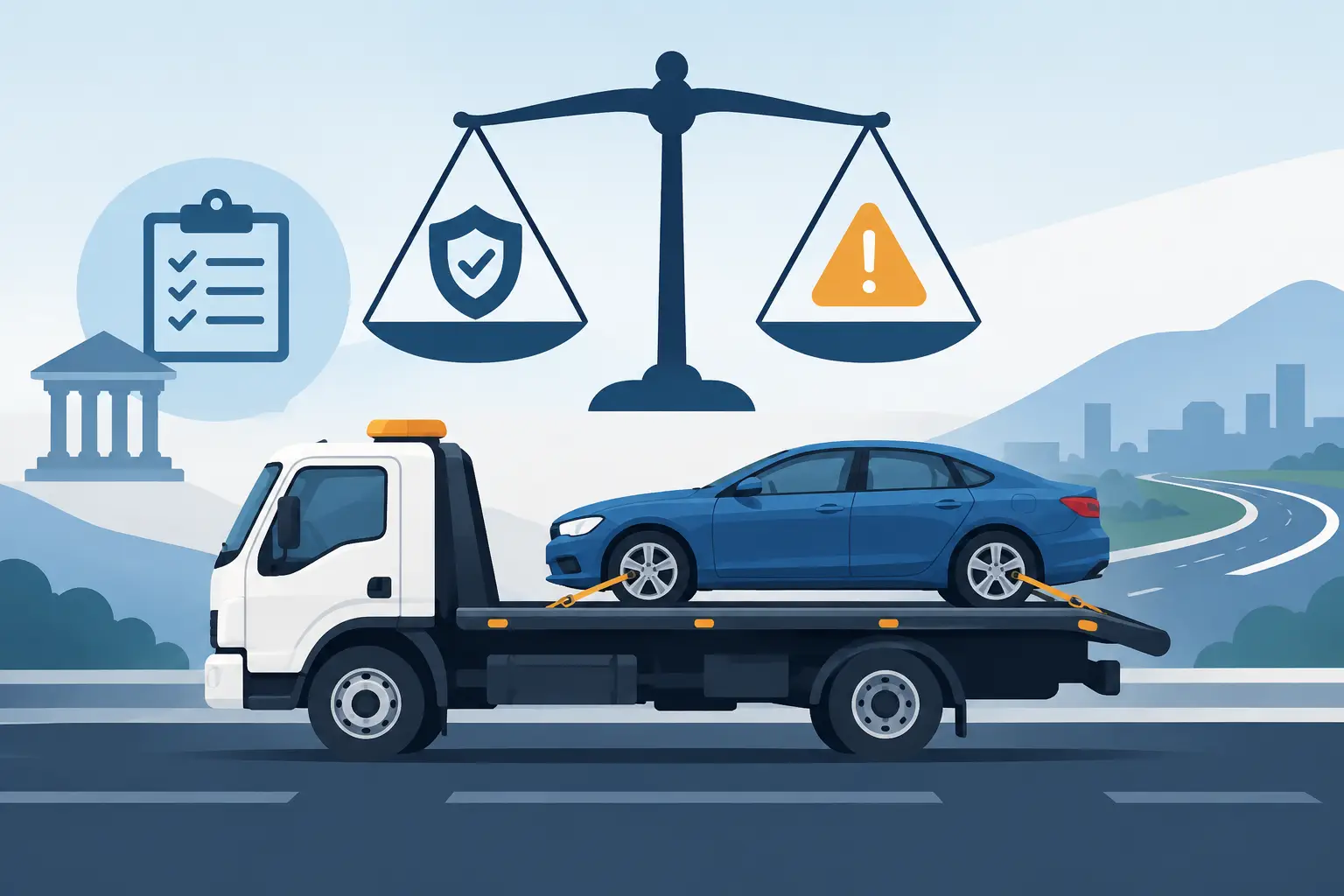
Transportation creates another layer. Lithium batteries are regulated as hazardous materials in commerce, and damaged, defective, or recalled batteries typically require additional packaging, labeling, documentation, and carrier controls. A shop cannot solve a thermal-event concern by placing a pack on a freight pallet and calling a recycler. Carriers and downstream processors frequently impose standards that are more restrictive than the baseline regulatory framework, particularly for packs with impact damage, water intrusion, visible deformation, elevated temperature, or uncertain state of charge.
For repair networks, the operational lesson is that a battery’s status must be established early. “Potentially damaged” is not a useful final disposition category when a vehicle is occupying a fenced lot, a carrier is waiting for instructions, and the insurer is evaluating total-loss economics.
The Collision and Claims Impact Starts at Intake
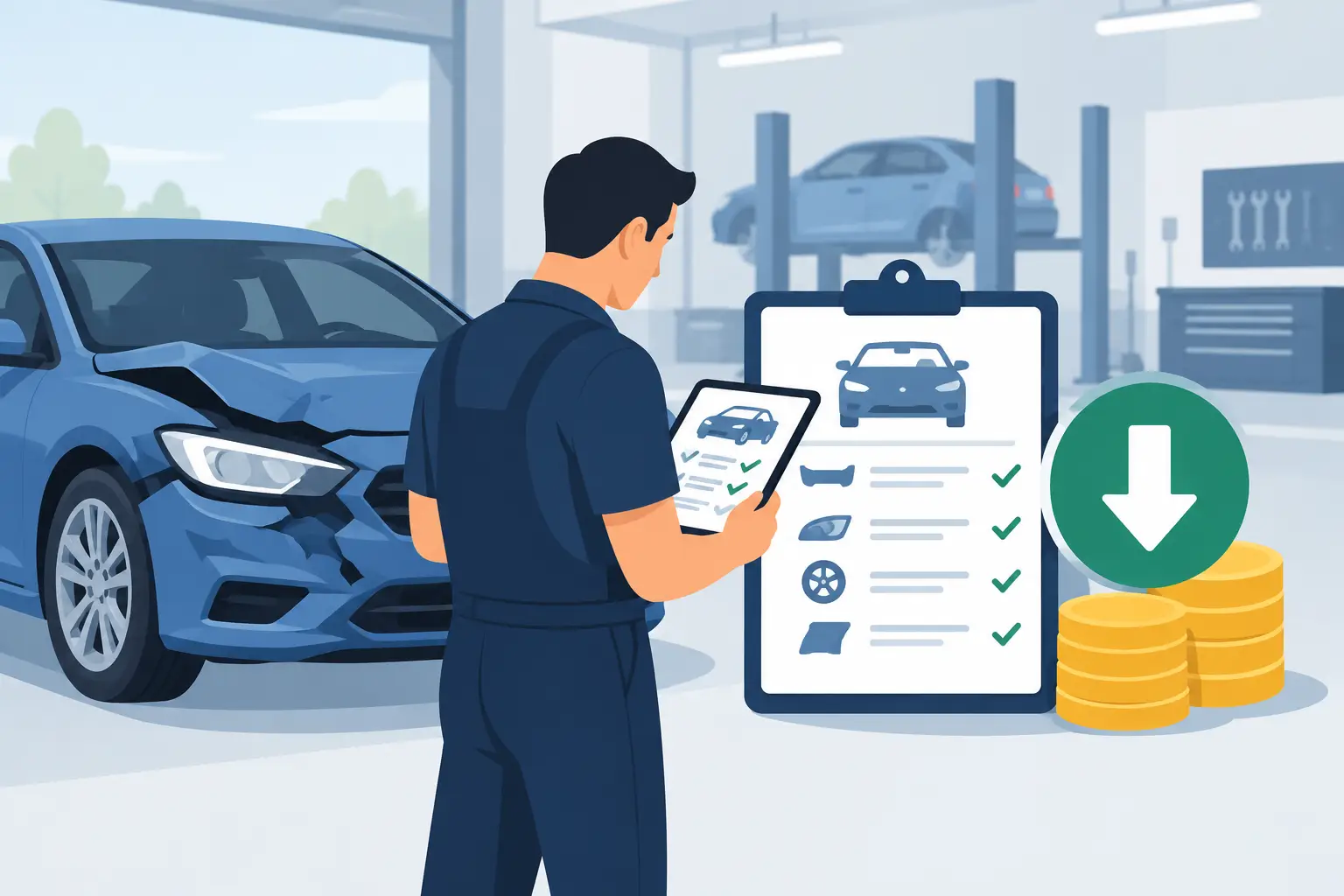
A modern EV estimate may identify battery-adjacent damage without proving that the pack itself is compromised. That is where claims handling, OEM repair information, diagnostic capability, and physical inspection intersect. A pack can require manufacturer-directed inspection or replacement even if it appears externally intact. Conversely, an improperly classified battery can be removed from the normal repair flow and sent into an expensive special-handling channel unnecessarily.
Insurers and repairers therefore need a shared escalation process. At minimum, it should define who can authorize high-voltage isolation, what evidence triggers an OEM technical review, how diagnostic scan results are retained, and when a vehicle moves from repairable asset to controlled battery-disposition case.
The financial exposure is not limited to the replacement pack. Towing, secure storage, de-energization, technician time, specialized packaging, hazardous-material transport, recycler fees, and rental duration can all affect claim severity. When a total-loss vehicle sits for weeks because the pack has not been assessed, salvage value can also deteriorate while storage costs accumulate.
This is why battery handling is increasingly a claims economics issue, not merely an environmental compliance issue. A carrier’s preferred recycler may have national coverage but limited capacity for damaged modules. A local recycler may accept the material faster but require documentation, packing, or transport arrangements that the network has not standardized. The lowest quoted disposal fee is rarely the lowest total-cost solution.
Storage Is a Capacity Problem, Not Just a Safety Protocol
Collision facilities have long managed hazardous materials, but high-voltage battery storage introduces a different combination of fire risk, real estate constraints, and unclear dwell time. A battery involved in a severe impact or fire may require separation, monitoring, and an area that does not compromise normal vehicle flow.
For multi-shop operators, centralized storage can improve control, but it adds transport events and may create permitting or local-fire-code questions. Decentralized storage keeps the battery closer to the original loss location but can burden smaller facilities that lack trained staff, secure space, or a reliable pickup schedule.
There is no universal best model. The right approach depends on regional EV volume, total-loss frequency, facility layout, local emergency-response expectations, and the availability of qualified transport and recycling partners. What matters is that the policy is built before the first damaged pack arrives, not after a fire department asks where it is being kept.
State Rules Will Continue to Add Complexity
Federal hazardous-waste and transportation rules set major guardrails, but states can add their own hazardous-waste, recycling, storage, and producer-responsibility requirements. California has been particularly active in developing an EV battery end-of-life policy framework, and other states are likely to pursue different versions of collection, recovery, labeling, and reporting requirements as battery volumes grow.
That creates a familiar challenge for national repair and insurance organizations. A uniform internal procedure is valuable, but it cannot ignore state-specific rules or local fire-code enforcement. Companies need a core battery-control standard with jurisdictional add-ons rather than a single generic policy that employees are expected to interpret on the fly.
Cross-border movement adds another consideration for North American operators. Batteries, black mass, modules, and recycling feedstock moving between the United States and Canada may be subject to additional import, export, and transboundary waste controls. The commercial destination of the material matters. A viable used module headed for legitimate remanufacturing is not treated the same way as a damaged pack sent for material recovery.
Documentation Will Determine Which Batteries Keep Value
The most valuable end-of-life battery is not necessarily the newest one. It is the one with a documented history, traceable ownership, known chemistry, identifiable part number, and credible condition assessment. That information can support repair, remanufacturing, second-life evaluation, parts recovery, or recycling. Without it, downstream handlers may price the pack as a higher-risk unknown.
Repairers and salvage operators should retain the information they already generate: vehicle identification number, battery part number, diagnostic results, collision photos, water-exposure findings, isolation records, technician notes, custody transfers, and shipping papers. OEM repair documentation should also be tied to the file when it dictates replacement or prohibits reuse.
This is especially relevant to salvage. A battery’s presence may increase the apparent value of an EV, but only if the buyer can establish whether the pack can be safely evaluated and legally moved. A vague auction description can shift risk downstream, reduce bidder confidence, and create disputes over responsibility for transport and disposal.
What Repair Networks Should Do Now
The strongest programs connect safety, compliance, and commercial control. Assign a battery-disposition owner at the corporate or regional level, even if individual locations retain day-to-day responsibility. That person should maintain approved vendor criteria, review recurring storage and transport costs, and update field procedures as OEM guidance and state rules change.
Facilities also need role-specific training. Estimators should know when battery concerns affect supplements and cycle time. Technicians need clear authority to stop work when a pack presents a hazard. Tow partners need instructions for post-crash handling and destination routing. Front-office teams need to understand why a vehicle cannot always remain in ordinary outdoor inventory.
Vendor agreements deserve the same scrutiny as other critical repair-network contracts. Confirm what battery conditions a recycler accepts, how quickly it can collect material, whether it provides compliant packaging, who arranges transport, what data accompanies the pack, and how final disposition is documented. A certificate or downstream confirmation may be necessary for internal audit, insurer reporting, or customer dispute resolution.
As EV battery recycling regulations mature, the winners will not be the businesses that simply find a recycler after a loss. They will be the ones that can move a battery from diagnosis to disposition with a defensible chain of custody, controlled cost, and no avoidable interruption to shop capacity.