





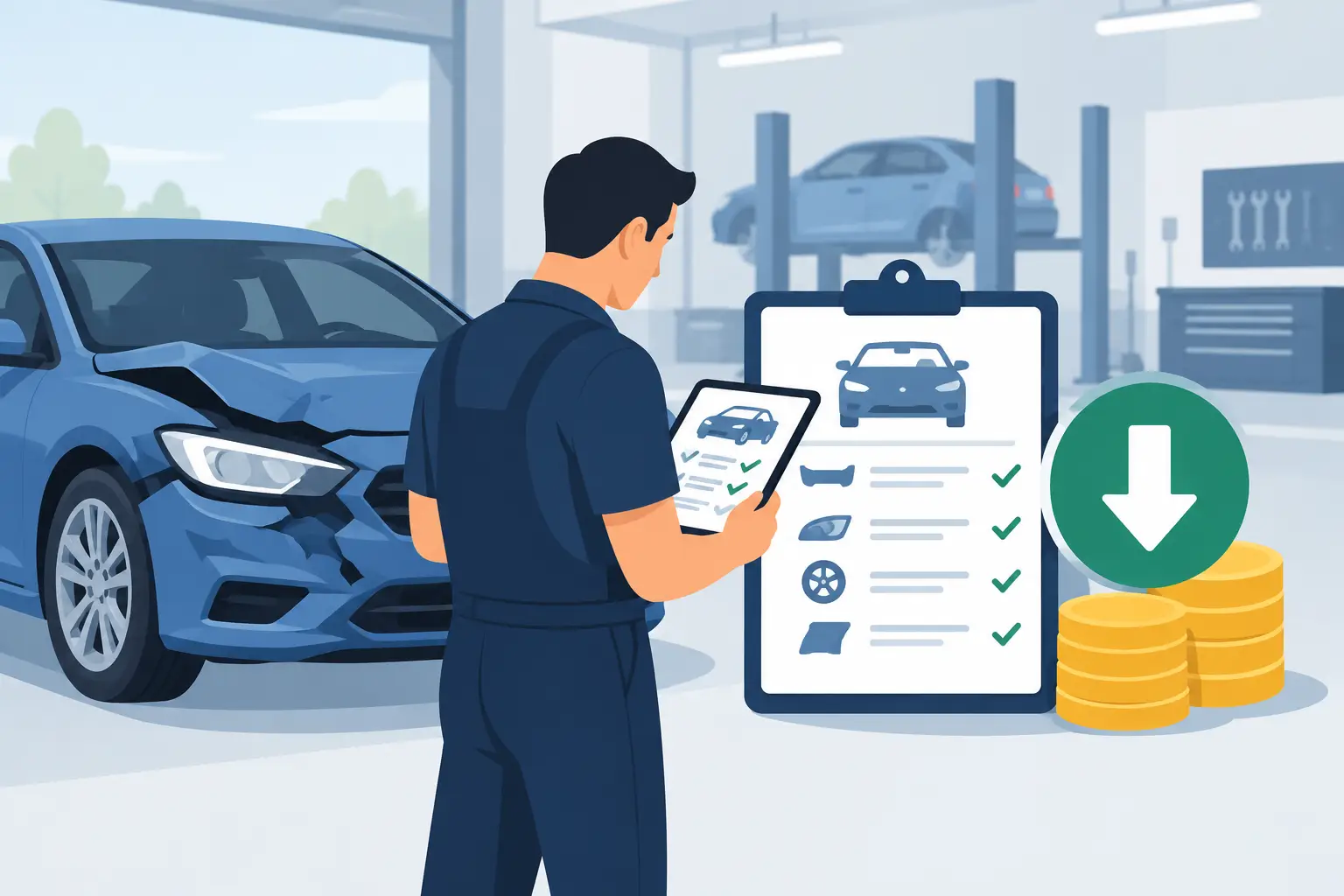




A repair plan can look complete in the estimate and still fail on the production floor because the shop cannot quickly verify the required procedure. OEM repair procedure access has moved beyond a technical reference issue. For collision and mechanical operations, it now affects cycle time, liability exposure, supplement handling, staffing models, insurer conversations, and the ability to accept increasingly complex vehicle work.
The shift is being driven by the vehicle parc. Advanced driver-assistance systems, high-voltage architectures, mixed-material construction, networked modules, and model-specific repair restrictions have made experience alone an insufficient control. A technician may know the general operation, but the vehicle manufacturer determines the approved sequence, replacement requirements, calibration conditions, scan expectations, and safety precautions for that specific VIN configuration.
OEM Repair Procedure Access Is an Operating System
Access is often discussed as a subscription cost or a right-to-repair policy question. Both matter, but they miss the operational reality inside a repair facility. A procedure is useful only when the right employee can find it, interpret it, document it, and move the work forward without creating a bottleneck.
That means a shop’s effective access model includes more than an OEM website login. It includes stable internet service, credential management, trained estimators, qualified technicians, compatible scan tools, a process for saving evidence to the repair file, and a clear escalation path when information is incomplete or a required operation falls outside the shop’s capabilities.
For multi-shop operators, inconsistency is often the larger problem. One location may have a disciplined blueprinting process and direct OEM subscriptions, while another relies on a technician’s memory, generic information, or a third-party provider without a documented verification step. The result is uneven repair quality and avoidable friction with payers, customers, and internal quality teams.
Procedure access also changes the economics of a supplement. When a required operation is identified after teardown, the issue is not simply whether the labor is billable. The shop must establish that the operation applies to the vehicle, explain why it is necessary, schedule the work, and retain documentation that supports the repair decision. Delays at any point can leave a vehicle occupying a production slot while parts, approvals, or sublet capacity catch up.
Why the Cost Debate Is Too Narrow
OEM subscriptions, portals, and diagnostic applications carry real expense. Independent shops, particularly smaller facilities, may face a patchwork of daily, monthly, and annual access models across brands. Those costs arrive alongside scan tools, calibration equipment, training, cybersecurity requirements, and wage pressure for technicians capable of using the information correctly.
But the larger cost can be the absence of access at the moment it is needed. A missed one-time-use fastener, improperly repaired structural component, omitted preconditioning step, or skipped ADAS calibration can create a quality failure that overwhelms the cost of a subscription. In collision repair, a procedure gap can also trigger a supplement, parts delay, rework event, or vehicle delivery dispute. In mechanical service, it can lead to incorrect programming, incomplete relearn procedures, or a repeat visit that consumes already constrained bay capacity.
The answer is not that every shop should buy every available OEM package. That approach can create wasted spend and administrative complexity. The better question is which makes, models, and repair categories the business handles often enough to justify direct access, and which should be routed through a vetted remote diagnostic, mobile service, dealership, or specialty partner.
A shop repairing a high volume of late-model domestic and Asian vehicles may need a different access portfolio than an independent European specialist or a rural mechanical facility with limited ADAS work. The key is to treat those choices as a service-line decision, not a last-minute purchasing decision after a vehicle is already disassembled.
Direct Access, Aggregators, and Outside Partners
Third-party information platforms and diagnostic providers play an important role in the aftermarket. They can improve workflow, consolidate common data, and give technicians a practical starting point. Yet their value does not eliminate the need to recognize when OEM-source information is required.
The distinction matters most where procedures are vehicle-specific, recently revised, safety-related, or tied to programming and calibration. A generic description of a bumper removal may be operationally useful, but it may not capture a particular sensor aim requirement, component replacement instruction, or battery isolation sequence for a specific trim level.
Outside partners can close capability gaps, especially for programming, immobilizer functions, advanced calibrations, and niche OEM systems. However, outsourcing does not outsource responsibility for process control. The repairer still needs to verify the work scope, capture supporting documentation, coordinate vehicle condition and targets, and ensure that the final file shows what was performed and why.
Documentation Is Becoming the Common Language
Claims organizations, repair networks, OEM certification programs, fleet customers, and legal stakeholders may approach documentation from different perspectives. They increasingly converge on the same expectation: the repair file should show that the operation was researched and completed according to applicable requirements.
That does not require turning every repair order into a library of screenshots. It does require a repeatable record. Shops need a practical method to retain the relevant procedure reference, VIN applicability, scan reports, calibration results, photos where useful, invoices for sublet work, and technician confirmation. The record should be easy to retrieve after delivery, not buried in a personal device, browser history, or email chain.
Estimators are central to this discipline. They are often the first people to identify likely research items during intake, teardown, and blueprinting. If they do not have defined triggers for procedure review, technicians may discover requirements only after the job has entered production. Conversely, estimators should not be expected to make technical judgments beyond their training. The strongest operations create handoffs between estimator, technician, diagnostic specialist, and production manager rather than assigning all accountability to one role.
For insurers, clearer documentation can reduce debate over whether an operation is speculative or necessary. That does not mean every negotiation disappears. Labor rates, administrative time, prevailing practices, and interpretation of supporting material will remain contested in many markets. Still, a repairer with a VIN-specific procedure and a consistent file is operating from a materially stronger position than one making an unsupported assertion.
Access Must Be Built Into the Repair Plan
The most effective shops make OEM research a planned gate, not an exception. At minimum, the process should identify procedure review triggers before work begins, including structural damage, restraint-system involvement, sensor or camera removal, glass replacement, suspension work, high-voltage components, module programming, and any repair involving bonding, welding, or sectioning.
The facility then needs to decide who owns each step. A central blueprint team may research and attach procedures before dispatch. A lead technician may validate repairability and required tools. A diagnostic coordinator may manage scans, programming, and calibration scheduling. In a smaller shop, one person may carry several of those functions, but the sequence should still be explicit.
Training deserves equal attention. Access to a portal does not automatically create competent interpretation. Technicians and estimators need to understand terminology, revision dates, applicability statements, warnings, and the difference between a recommended operation and a required one. Managers need enough familiarity to recognize when a production delay is a legitimate technical constraint rather than a workflow failure.
There is also a governance dimension. Shared logins, uncontrolled credentials, and saved customer or vehicle data can create cybersecurity and licensing concerns. Shops should know who has access, how credentials are protected, and whether their use of procedures, software, and diagnostic functions aligns with the provider’s terms. This is especially relevant as more service information is delivered through connected platforms rather than static documents.
The Competitive Question Is Response Time
As vehicle complexity increases, the differentiator will not be whether a shop can say it has access to OEM information. Most established operators can obtain information somehow. The differentiator is how fast the organization can turn that information into an approved, documented, correctly executed repair.
That response time affects key performance indicators that owners and MSO leaders already monitor: days to repair, touch time, supplement frequency, rework, rental duration, technician utilization, and customer updates. It also affects business development. Fleet accounts, dealer partners, insurers, and consumers increasingly want confidence that a facility can manage late-model vehicles without improvising its way through the job.
OEM repair procedure access is therefore best viewed as capacity infrastructure. It is part of the system that determines whether a shop can safely convert complex repair demand into profitable completed work. Operators that define their access portfolio, standardize research triggers, document results, and build qualified partner relationships will be better positioned when the next unfamiliar vehicle reaches teardown.