






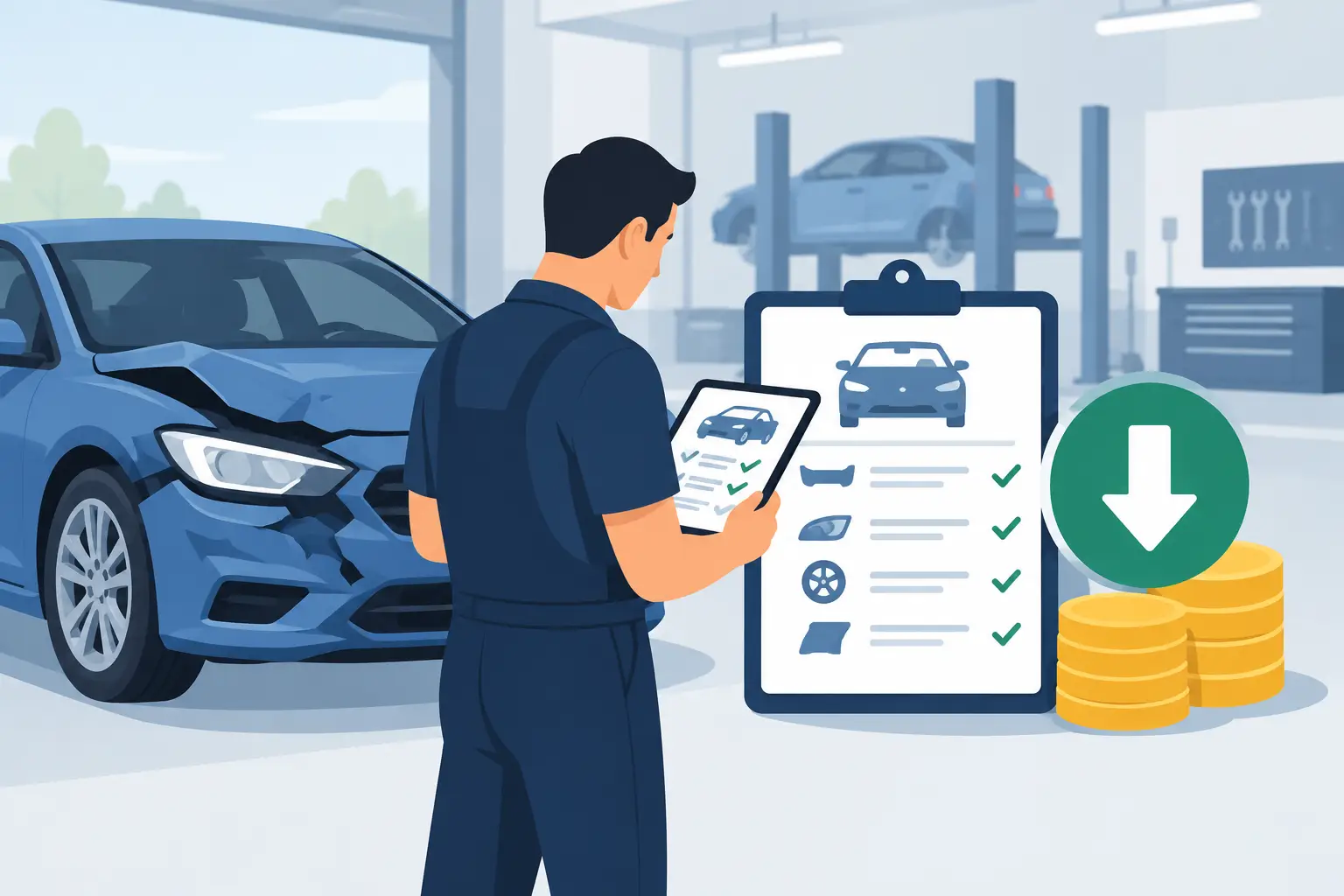



A hybrid arrives with a conventional maintenance concern, a warning light, or collision damage near the battery enclosure. The repair order may look familiar at intake, but hybrid vehicle service demand is making the underlying work less predictable for mechanical and collision operations. Shops must now determine whether they have the scan-tool access, high-voltage procedures, parts visibility, technician authorization, and bay time to complete the job profitably.
For North American service businesses, the issue is not simply whether hybrids will replace internal-combustion vehicles or whether full battery-electric adoption will accelerate. Hybrids are already embedded in the active vehicle population, and their service needs are appearing across routine maintenance, diagnostics, accident repair, towing, insurance claims, and used-vehicle reconditioning. That broad footprint makes hybrid readiness an operating question rather than a future-planning exercise.
Hybrid Vehicle Service Demand Is Broadening the Repair Mix
Hybrid service volume does not move as one category. A high-mileage hybrid may come through an independent mechanical shop for brakes, suspension, cooling-system work, tires, or a drivability concern. A late-model hybrid involved in a collision can create a different workload: pre-repair scanning, battery isolation, structural assessment around high-voltage components, replacement-part lead times, and post-repair calibration.
The practical implication is that hybrid demand is not confined to specialty EV facilities. It reaches general repair shops, dealer service departments, collision centers, towing providers, salvage operators, and parts distributors. Each participant faces a different exposure point, but all need clearer process controls when a vehicle combines internal-combustion, electric-drive, battery-management, and advanced driver-assistance systems.
The service mix also varies by region and customer base. Fleet-heavy markets may see hybrid demand tied to delivery, municipal, rideshare, or corporate vehicles that accumulate mileage quickly. Dealer groups may encounter more warranty, recall, and certified-pre-owned work. Collision operators in metro markets may see a growing share of hybrid claims because those vehicles are increasingly common in newer model-year populations. A shop’s investment case should be built around its own car parc and referral patterns, not national electrification headlines alone.
Diagnostics, Not Maintenance, Often Set the Margin
Routine maintenance on many hybrids can be straightforward. Regenerative braking may extend pad life, while engine oil, filters, tires, suspension components, and climate-control systems remain familiar service categories. But familiar does not mean simple. Brake corrosion, infrequent friction-brake use, thermal-management concerns, and model-specific maintenance intervals can alter labor planning and inspection routines.
The harder margin question begins when the vehicle presents an intermittent warning, reduced-power condition, no-start complaint, charging-system issue, or communication fault. A hybrid diagnostic path may involve the 12-volt system, inverter, traction battery, battery cooling, high-voltage cable routing, internal combustion engine controls, and multiple networked modules. Generic code retrieval is rarely enough to support an accurate estimate or repair decision.
Shops that treat hybrid diagnostics as an extension of conventional drivability work can create costly delays. The failure may be a wiring concern, a cooling issue, a module fault, or a battery-state condition, not necessarily a failed traction battery. Conversely, a technician who lacks access to OEM procedures may spend unbillable time testing around a fault rather than following the prescribed isolation sequence.
That makes diagnostic discipline commercially important. Leaders should define when staff must use OEM information, when remote or local diagnostic support is appropriate, how test time is authorized, and what documentation is retained. The same rigor protects repair quality and helps service advisors explain why a seemingly ordinary warning light requires more than a quick scan.
High-Voltage Safety Is a Workflow, Not a Tool Purchase
A high-voltage glove set, insulated tools, and a warning sign do not constitute a hybrid program. Facilities need documented procedures for identifying high-voltage vehicles at intake, isolating energy sources, verifying zero potential where required, securing work areas, and responding to damaged batteries or thermal events.
Training needs to be role-specific. Advisors need enough awareness to identify vehicles and communicate realistic scheduling. Technicians need model-appropriate service information and hands-on competency. Managers need to know which jobs the facility can accept, which require a qualified partner, and when an estimate must include sublet, diagnostic, or calibration operations.
Collision repair adds another layer. A battery pack may not show obvious external damage after an impact, yet OEM guidance can require inspection, measurement, monitoring, replacement, or handling restrictions. Shops should avoid making a visual-only judgment on battery condition. Insurers and repairers also need alignment on documentation, storage, transport, and the decision points that trigger a battery-related supplement.
Capacity Planning Must Account for Non-Wrench Time
Hybrid work can consume capacity before a technician turns a fastener. Vehicle identification, research, scan reports, safety preparation, battery condition assessment, parts verification, calibration planning, and customer authorization all create administrative and diagnostic time. If the estimating process does not capture those operations, the shop absorbs them through lower effective labor rates and slower throughput.
For multi-shop operators, the immediate answer is not always to equip every location to perform every high-voltage repair. A hub-and-spoke model may be more economical, with defined triage at each store and advanced diagnostic or battery-related work routed to designated facilities. This can concentrate training, tooling, safety equipment, and management oversight where utilization is sufficient.
That approach carries trade-offs. Centralizing work can add transport time, create scheduling friction, and weaken the customer experience if communication is poor. It also requires clear ownership of the repair plan between the originating shop and the specialty location. Still, a disciplined referral model is preferable to accepting work beyond the facility’s authorized capability.
Independent shops face a similar build-versus-partner decision. The right threshold depends on hybrid repair-order volume, technician availability, local dealership capacity, diagnostic partner quality, and the shop’s appetite for training and equipment investment. A facility may reasonably handle maintenance and selected diagnostics while referring battery enclosure damage, complex isolation faults, or OEM-restricted procedures.
Parts and Claims Operations Need Earlier Visibility
Hybrid repairs can expose familiar supply-chain problems in less familiar components. Cooling assemblies, inverters, battery-related parts, specialized harnesses, underbody shields, and vehicle-specific electronics may have longer lead times than conventional wear items. In collision repair, a delayed component can hold a vehicle in a high-cost storage or rental position while consuming parking capacity.
Parts departments and estimators should identify hybrid-specific components earlier in the repair plan. That means validating part numbers against the VIN, checking supersessions, distinguishing serviceable assemblies from restricted components, and confirming whether programming, initialization, or calibration is required after installation. It also means avoiding assumptions that a recycled or aftermarket alternative is appropriate for every electrical or high-voltage-related part.
Claims operations have a parallel responsibility. Severity can rise when a collision affects the underbody, rear structure, cooling system, or electronic architecture around a hybrid powertrain. Yet a higher estimate is not automatically evidence of overrepair. Insurers, appraisers, and repairers need shared documentation tied to OEM procedures, scan results, measurements, and battery handling requirements.
The strongest repair plans make those decisions visible early. Late discovery of a damaged battery tray, unavailable harness, required calibration, or transport restriction creates supplements and cycle-time pressure that neither carrier nor repairer can manage effectively at the end of the job.
Workforce Strategy Will Separate Prepared Shops From Busy Shops
Hybrid demand intensifies an existing technician shortage because it raises the skill level required for a portion of the work while adding safety and documentation expectations. The industry does not need every technician to become a high-voltage specialist overnight. It does need a credible pathway from vehicle recognition and basic safety awareness to supervised service, advanced diagnostics, and complex repair authorization.
Training investments are most useful when tied to operating standards. A course completion alone does not answer whether a technician can safely isolate a particular vehicle, interpret manufacturer information, or execute a repair without creating a liability exposure. Shop leaders should map training to the procedures and vehicle segments they actually intend to service.
Compensation and dispatch models matter as well. Diagnostic work that is poorly billed or difficult to flag can discourage technicians from taking the jobs that require the most thought. Clear labor operations, protected test time, and consistent advisor communication help prevent hybrid repairs from becoming the work technicians avoid because they are unpredictable.
Hybrid vehicle service demand will continue to arrive in ordinary ways: a maintenance appointment, an insurance claim, a fleet inspection, a trade-in recon line, or a tow after a warning light. The operators that gain from it will be those that turn each arrival into a defined workflow – one that matches capability, captures necessary operations, and protects both technician safety and repair quality.