






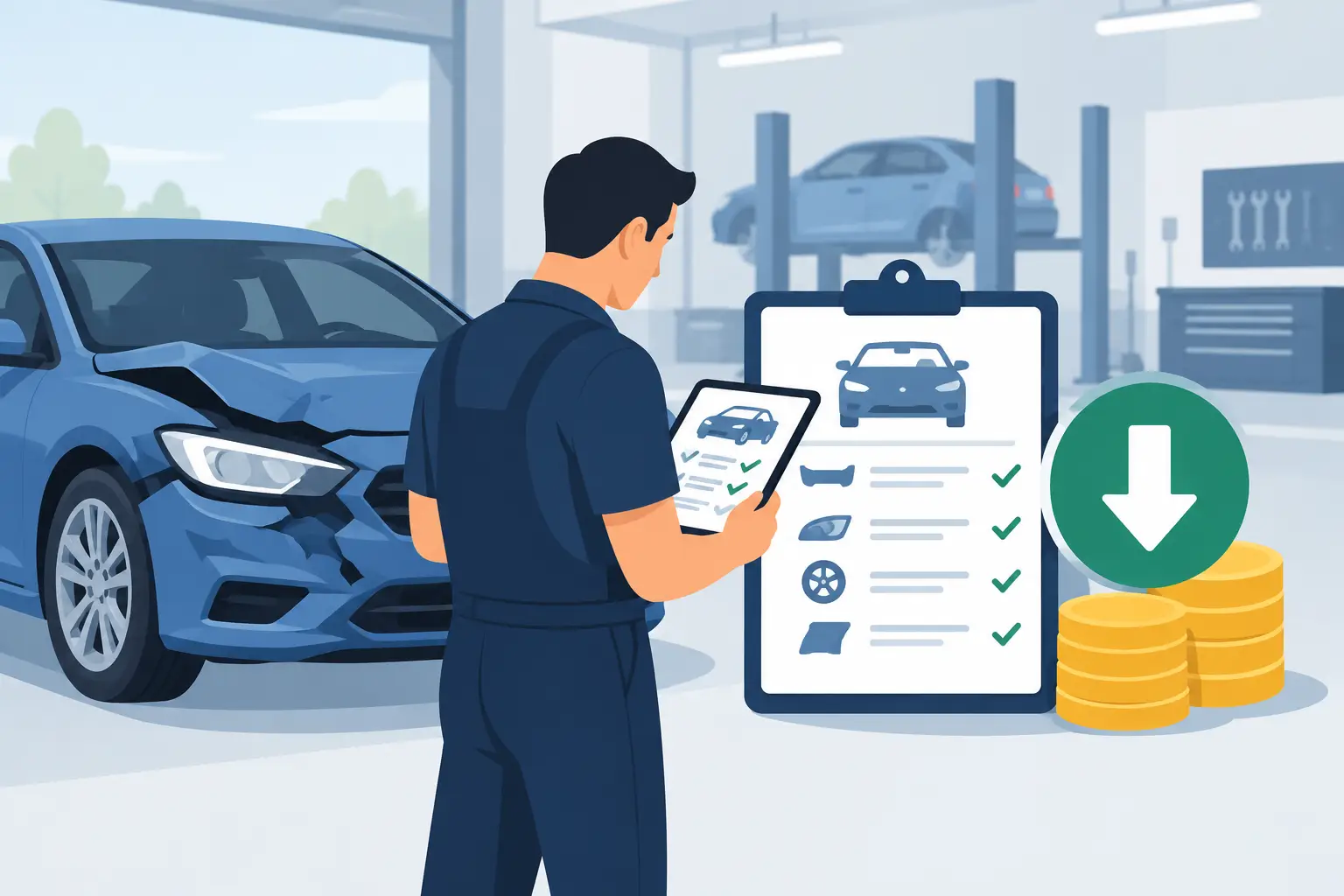




A shop can be fully booked and still lose money in the handoffs. A missed authorization, an unbilled sublet, a delayed parts status, or a technician waiting on a repair plan can erode gross profit faster than another full day of car count can replace it. That is why the best automotive shop management systems are not simply digital appointment books. They are operating systems for labor, parts, customer communication, reporting, and accountability.
For independent repairers and multi-shop operators, the right platform depends less on a feature checklist than on the business model it must support. A high-volume mechanical shop, a collision center working insurer DRP assignments, and a heavy-duty fleet service operation may all call their software a shop management system. Their workflow, compliance exposure, estimating needs, and integration priorities are materially different.
What separates the best automotive shop management systems
The most useful systems create a reliable chain from the initial customer contact through repair order closeout. That means appointments become work orders, technician findings become authorized recommendations, parts purchases are reflected in job cost, and completed work reaches the accounting and performance reports without repeated manual entry.
That chain is where many implementation decisions succeed or fail. A platform with polished inspections and texting can improve approval rates, but it may not solve weak labor tracking or inconsistent parts receiving. Conversely, a system built around detailed productivity reporting can frustrate advisers if the front counter workflow is cumbersome. The best fit is the system that addresses the facility’s most expensive operational constraint.
For mechanical repair businesses, that constraint is often effective labor rate, technician efficiency, deferred work conversion, or parts gross profit. For collision operations, it may be blueprinting discipline, parts procurement cycle time, supplement control, repair planning, production scheduling, or insurer-facing estimate workflows. MSOs also need location-level consistency without stripping local managers of the information needed to run daily production.
Core workflow matters more than feature volume
A credible evaluation starts with the repair order. Operators should see how a real job moves through the software: appointment, vehicle intake, inspection, estimate, authorization, parts ordering, dispatch, technician time, quality control, payment, and follow-up. If a vendor demonstration skips the difficult portions of that sequence, request a live workflow using one of the shop’s own recent repair orders.
Pay close attention to exceptions. How does the system handle a parts backorder, a vehicle waiting for customer approval, a warranty claim, a sublet calibration, a declined recommendation that returns six months later, or a technician reassigned mid-repair? Shops do not lose margin on ideal workflows. They lose it when exceptions are tracked in texts, spreadsheets, whiteboards, and employees’ memories.
A visual production board can be valuable, particularly for shops managing high car count or multiple departments. But it should reflect real status changes, not become a second data-entry task. If technicians, advisers, and parts personnel are not updating statuses at the points where work occurs, production reporting will quickly become decorative rather than operational.
Mechanical, collision, and fleet platforms serve different jobs
The market is often discussed as if one product category serves every repair business. In practice, the strongest platforms are usually designed around a segment’s dominant workflow.
Mechanical-service operators commonly evaluate platforms such as Tekmetric, Shop-Ware, Shopmonkey, NAPA TRACS, RO Writer, and Mitchell 1 Manager SE. The differences are not cosmetic. Some shops prioritize digital inspections, integrated communications, and cloud-native workflow. Others need mature parts catalog connections, established accounting practices, or specific capabilities for tire, fleet, or franchise operations. A shop’s existing counter process and technician adoption level can matter as much as the software’s newest interface.
Collision centers operate in a more claims-dependent environment. Their management stack may center on estimating and repair-planning ecosystems from providers such as CCC, Mitchell, or Solera/Audatex, supplemented by production management, parts procurement, customer communication, accounting, and OEM repair-information tools. The selection question is rarely whether a single platform can do every job. It is whether the full technology stack maintains clean data between the estimate, blueprint, parts file, repair plan, supplements, calibration documentation, and final bill.
For fleet and heavy-duty service, platforms such as Fullbay and other fleet-oriented systems may be more suitable because asset history, preventive maintenance schedules, mobile work orders, unit downtime, and authorization structures differ from retail repair. A consumer-style appointment flow is not the center of the business when a fleet manager is measuring availability across dozens or hundreds of units.
The integration question is really a margin question
Most vendors promise integrations. Operators should translate that promise into specific financial and production questions. Does labor time flow accurately into payroll or technician compensation? Are parts invoices and cores captured against the correct repair order? Can advisers see inventory availability and price changes before quoting the work? Does the accounting export preserve enough detail to reconcile sales, sales tax, discounts, and cost of goods sold without cleanup?
A disconnected system can create hidden administrative labor while distorting performance reports. If a shop cannot trust gross profit by repair order, technician productivity, parts margin, or advisor sales results, leadership is managing from delayed or incomplete information. That is especially risky in an environment of wage pressure, escalating diagnostic complexity, higher parts costs, and more frequent sublet services.
Collision operators should scrutinize connections involving estimating, parts ordering, payments, rental coordination, insurer communication, and OEM procedure documentation. Mechanical shops should test catalog, tire, payment, accounting, marketing, and digital inspection connections. In both segments, ask whether the integration is native, certified, one-way, batch-based, or dependent on manual export. Those distinctions affect speed, reliability, and support responsibility.
Reporting should change decisions, not just produce dashboards
The best reporting tells a manager where the day is breaking down. That could be open repair orders with no next action, work awaiting approval, parts not received by promised date, unclosed labor lines, unbilled sublets, or a sharp decline in average repair order for a particular adviser or location.
At the ownership level, reporting should support decisions about capacity and capital. Can leadership compare car count, average repair order, effective labor rate, labor gross profit, parts gross profit, technician efficiency, technician productivity, and estimate-to-repair conversion across locations? Can those figures be filtered by service type, fleet account, payor, or adviser? If not, an MSO may have plenty of data but little comparative control.
There is a trade-off here. Highly configurable reporting is useful only if someone owns the definitions. A multi-location company should agree on what counts as a completed repair order, how discounts are allocated, when a part cost is recognized, and how rework is coded. Software cannot create operating discipline, but it can expose the absence of it.
Implementation is a workforce project
Software purchases are frequently framed as technology decisions, then handed to an office manager to implement alongside normal duties. That approach invites poor data migration, uneven process adoption, and a fast return to side spreadsheets.
The implementation plan should identify a business owner, a location-level champion, and a vendor escalation contact. Before launch, clean customer and vehicle records, standardize labor operations where practical, set user permissions, establish approval rules, and decide which reports will be reviewed daily and weekly. Train by role. Service advisers, technicians, parts personnel, production managers, and accounting staff do not need the same training or the same view of the system.
For larger groups, a pilot location can reduce risk, but only if management measures the results. Track repair order cycle time, authorization rate, hours billed per repair order, open-RO aging, parts delays, and administrative time before and after launch. Adoption problems are easier to correct when they are treated as operating issues rather than blamed on employee resistance.
How to make the selection decision
A practical short list usually contains two or three systems, not seven. Start with the workflow gaps that have a measurable cost, then ask each vendor to demonstrate those situations using the shop’s real data and terminology. Include the people who will use the software every day, but keep final accountability with leadership because the decision affects pricing discipline, reporting, customer retention, and scalability.
Pricing also needs a full-cost view. Consider implementation fees, data conversion, training, hardware, payment processing, messaging charges, interface fees, additional user licenses, and the internal labor required to change processes. The least expensive subscription can become costly if it requires constant workarounds. The most sophisticated platform can be equally expensive if the shop lacks the management structure to use its reporting.
The strongest system is the one that makes the next repair order easier to control than the last. For operators facing tighter labor markets, more advanced vehicle systems, and continued pressure on repair margins, that practical advantage is worth more than a long feature list.