








Diagnostic pricing starts with the work, not the tool
A pre-repair scan takes five minutes. The vehicle then produces 18 diagnostic trouble codes, two unrelated history codes, one network communication fault, and a restraint-system code requiring a repair decision. That is the operating reality behind how to price diagnostic scans. The charge cannot be based solely on the time a scan tool is connected. It must reflect the technician judgment, documentation, equipment investment, workflow interruption, and liability attached to converting vehicle data into a repairable plan.
For collision and mechanical operations, diagnostic pricing has become a margin-management issue as much as a technical one. Advanced driver-assistance systems, multiplexed networks, electric vehicles, OEM procedures, and insurer documentation requirements have expanded the role of diagnostics well beyond code retrieval. Shops that treat every scan as an undifferentiated flat fee risk underrecovering on complex vehicles. Shops that charge without a clear method risk estimate friction, customer confusion, and inconsistent execution across locations.
The practical objective is a pricing structure that a service advisor, estimator, technician, customer, and payer can understand: define the work, capture the evidence, and apply a consistent rate.
How to price diagnostic scans: build from the work performed
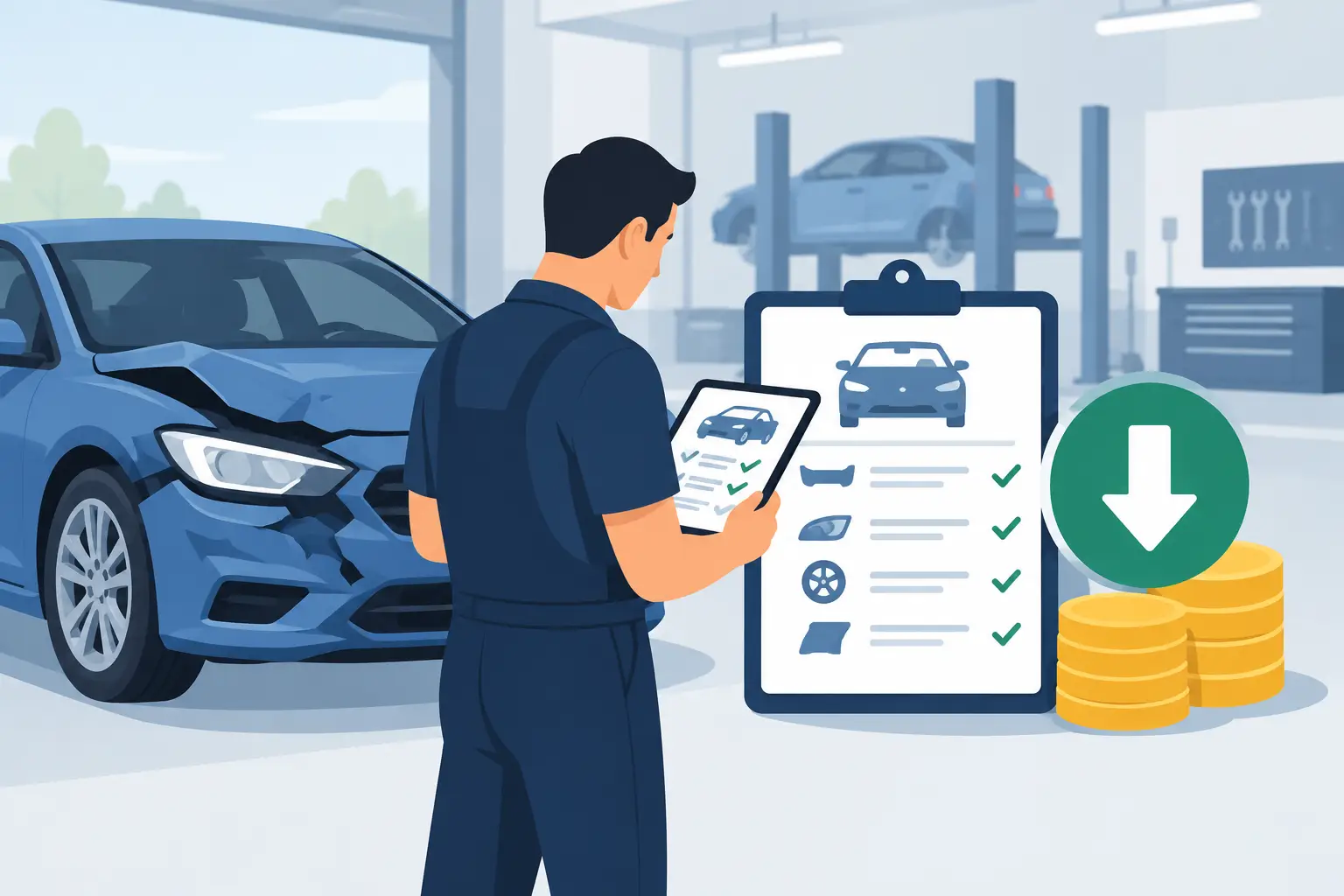
The first decision is to separate a scan from diagnosis. A scan is the act of connecting approved equipment, communicating with vehicle modules, retrieving results, and recording the output. Diagnosis begins when a qualified technician interprets faults, researches procedures, tests circuits or components, isolates a cause, and recommends corrective action.
Those activities may happen in sequence, but they are not the same service. Combining them into one low scan fee creates a familiar problem: the technician spends 30 to 90 additional minutes investigating codes that the shop has not priced. Conversely, charging diagnostic time for a straightforward pre-repair or pre-service health check can appear disproportionate if the process truly stops at retrieval and documentation.
A useful policy distinguishes among pre-repair scans, post-repair scans, diagnostic evaluation, programming or initialization, and calibration verification. Each has a different labor profile and may involve different equipment, subscriptions, or sublet partners. The estimate should describe the actual operation rather than rely on a generic “scan fee” that obscures what occurred.
Price technician time at the right labor category
A diagnostic operation should generally recover labor at the rate appropriate to the person performing it. If an experienced electrical or ADAS technician is required to interpret module faults and determine repair direction, using a basic mechanical labor rate can understate the work. If a porter or junior technician only performs a prescribed scan-and-upload process under a tightly controlled workflow, a lower internal cost structure may be appropriate, provided the final review and quality controls are real.
The labor rate is only one part of the calculation. Managers should establish a standard time allowance for routine scan operations based on observed production data. That allowance can include vehicle intake, battery-support setup when required, tool connection, complete-system scan, report review, report attachment, and communication with the estimator or advisor. A nominal five-minute assumption rarely survives contact with a busy shop floor.
For more involved work, use measured time or defined diagnostic increments. Many facilities bill an initial diagnostic block, then obtain authorization before continuing. That approach protects the customer from an open-ended charge while allowing the shop to investigate intermittent faults, damaged harnesses, network issues, or post-collision module communication problems that cannot be resolved through a single scan report.
Recover equipment, software, and operating overhead
Diagnostic platforms carry continuing costs: scan tools, OEM subscriptions, remote diagnostic services, security credentials, battery maintainers, tablets, network infrastructure, training, and technical-information access. A shop that prices only the technician’s direct wage will not recover the capital and recurring expense required to deliver the service reliably.
This does not mean every invoice needs a separate charge for every software subscription. In most operations, those costs belong in the labor rate, a standardized diagnostic operation, or a clearly defined remote-service charge. The right choice depends on the facility’s accounting model and local payer environment. What matters is that management knows where recovery occurs.
Multi-shop operators should be especially cautious about setting one national scan price without reviewing local labor rates, technician availability, tool deployment, and insurer mix. Standardized policy is valuable. Standardized underpricing is not.
Document the decision trail, not just the invoice amount
A defensible diagnostic charge begins before the vehicle enters a bay. The repair order or estimate should identify why the scan is needed: pre-repair health check, collision impact assessment, warning indicator, drivability concern, post-repair verification, OEM procedure, or calibration-related requirement.
The file should retain the scan report, relevant OEM procedure or repair-planning notes, technician findings, and any customer or payer authorization for extended diagnosis. When a scan leads to no repair, that documentation becomes even more important. No-parts outcomes are still legitimate diagnostic outcomes when the shop has performed professional testing and established that a condition is intermittent, pre-existing, outside the scope of repairs, or not presently reproducible.
For collision centers, the scan report should not be treated as a substitute for repair planning. A clean report does not automatically eliminate the need to follow OEM inspection requirements after an impact. A report with faults does not automatically prove collision causation. Estimators and technicians need a documented process for separating impact-related damage, prior conditions, and codes generated by low voltage, disconnected components, or repair activity.
That discipline matters in claims negotiations. The strongest file does not argue that diagnostics are necessary in the abstract. It shows the vehicle-specific reason, the procedure performed, the result, and the operational consequence.
Set a payer-aware policy without letting payers set the price
Insurers, fleet clients, warranty administrators, and retail customers may each approach diagnostic charges differently. Some require itemized documentation. Some recognize established labor operations. Some prefer a flat charge for a pre- and post-repair scan. Others will challenge any charge that appears duplicative of programming, calibration, or diagnostic labor.
The shop’s response should be consistency, not improvisation. Establish written rules for when scans are performed, who may authorize additional diagnostic time, when sublet remote diagnostics are used, and how charges are presented. Train front-counter and estimating staff to explain the work in practical terms: the scan identifies vehicle-system conditions and supports a safe repair plan; further diagnosis is authorized when the findings require testing.
Avoid discounting diagnostic work simply because a customer sees it as “plugging in a computer.” That description ignores the expertise and infrastructure behind a reliable result. At the same time, avoid presenting every vehicle as though it requires extensive investigation. Credibility comes from matching the charge to the documented service.
Build a repeatable pricing matrix
A pricing matrix keeps the decision at the operational level rather than leaving every charge to individual judgment. It should define at least four service categories:
- A standard pre-repair or pre-service scan, including report capture and initial review.
- A post-repair scan or verification process, with documentation of remaining faults and repair-related outcomes.
- An initial diagnostic evaluation, priced as a defined labor block and requiring authorization for additional time.
- Remote diagnostics, programming, initialization, or calibration-related work, with separate treatment for internal labor and third-party charges.
The matrix should also identify exceptions. High-voltage vehicles may require a different technician qualification level and additional safety procedures. Vehicles with module communication failures, water intrusion, flood exposure, or extensive collision damage may move quickly from a routine scan into measured diagnostic labor. A shop should not force those cases into a flat-rate category merely because that is easier to estimate.
Review the matrix quarterly against actual clocked time, realized labor sales, scan-tool expenses, sublet costs, denial patterns, and technician feedback. If the routine scan allowance consistently exceeds or falls short of actual work, adjust it. If diagnostic labor is regularly written off because authorization is delayed, revise the estimate and communication process rather than asking technicians to absorb the loss.
Treat diagnostics as a controlled production operation
The best pricing model will fail if scanning is performed inconsistently. Assign ownership for tool updates, subscription management, battery-voltage procedures, report storage, technician training, and quality review. In a collision environment, integrate scans into blueprinting and final quality-control checkpoints. In mechanical service, build them into the inspection and authorization sequence so the customer understands the transition from code retrieval to diagnosis.
Diagnostic scans are now part of the cost of producing accurate repairs, not an occasional add-on reserved for warning lights. The shops that protect margin will be the ones that make the work visible, price it according to its real resource demand, and use the resulting data to improve repair planning on the next vehicle.