









Claims Economics
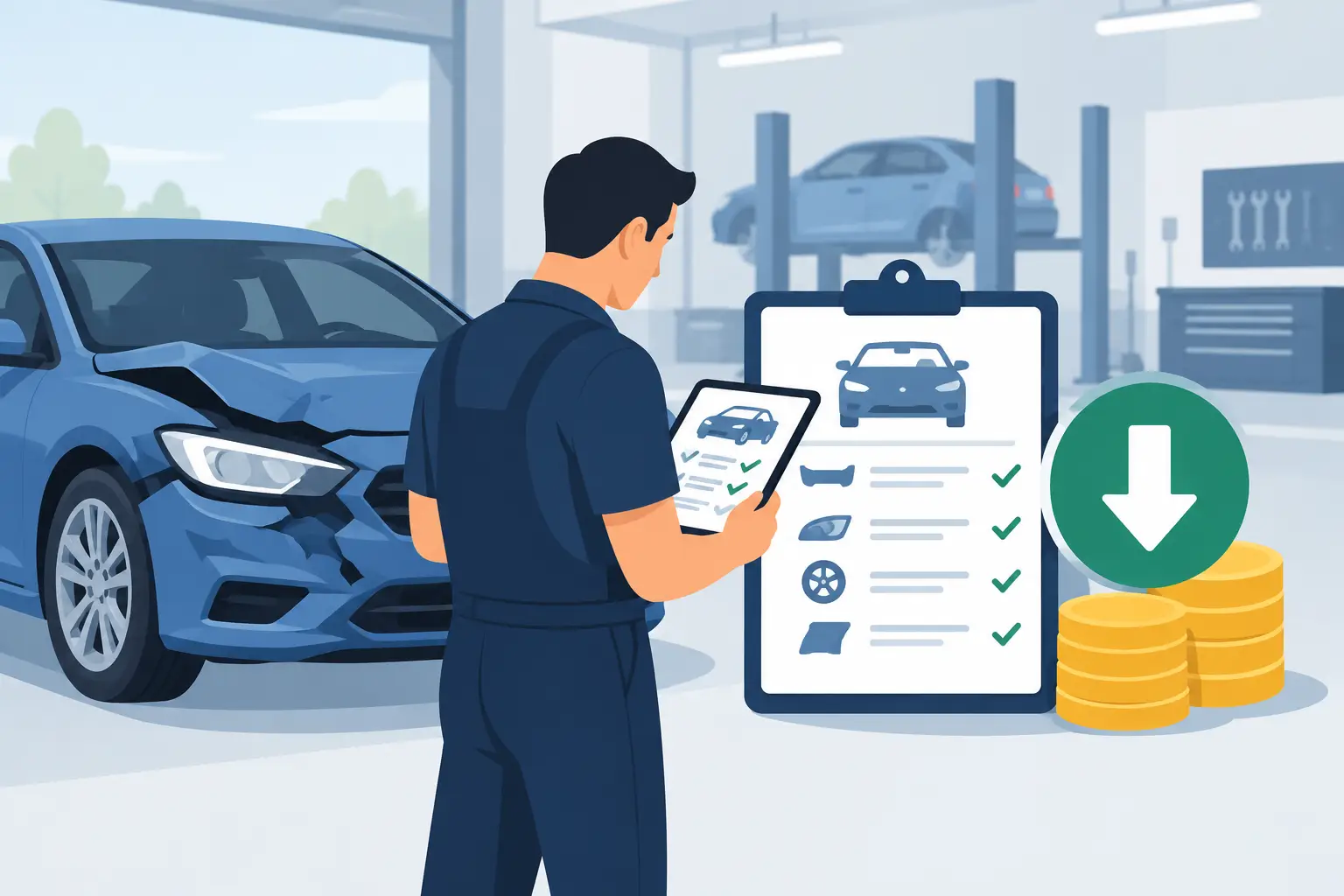
A late-model front-end loss that once moved through a conventional estimate can now carry radar aim requirements, camera calibration, sensor replacement, higher-cost parts, and more administrative review before the vehicle reaches paint. That is the operating reality behind insurance claims inflation drivers. For carriers, the issue appears as rising loss costs and deteriorating combined ratios. For repairers, it shows up in stalled throughput, disputed procedures, technician capacity constraints, and a widening gap between posted labor rates and the actual cost of producing a safe repair.
Claims inflation is not a single-price problem. It is a layered interaction among vehicle complexity, parts sourcing, labor availability, repair duration, weather losses, litigation, and the cost of capital tied up in every claim. The repair businesses that separate these drivers from general “inflation” will be better positioned to defend estimates, plan staffing, and make equipment decisions.
Insurance Claims Inflation Drivers Start With Repair Severity
The most durable source of claims inflation is the changing vehicle itself. Newer vehicles integrate advanced driver-assistance systems into bumpers, windshields, mirrors, lighting assemblies, and structural components. A relatively minor impact can affect systems that require scanning, precise measurement, programming, road testing, or static and dynamic calibration.
This changes severity even when collision frequency moderates. A bumper cover is no longer just a bumper cover if it contains radar units, parking sensors, camera hardware, active grille shutters, or brackets with specified replacement requirements. Likewise, a windshield replacement can trigger forward-facing camera recalibration, while wheel and suspension work may require alignment-related ADAS procedures.
For insurers, the challenge is estimating consistency and claims leakage. For collision centers, the challenge is documentation. An operation that cannot capture OEM procedures, pre- and post-repair scan results, sublet invoices, calibration records, and technician time will struggle to recover legitimate repair costs. The discussion is no longer simply whether a line item belongs on an estimate. It is whether the repair file establishes the process required to return the vehicle to pre-loss condition.
Repair severity also varies sharply by vehicle mix. Luxury models, EVs, large pickups, and vehicles with high levels of ADAS content can produce materially different repair economics from older mainstream vehicles. Carriers and MSOs that rely too heavily on portfolio averages can miss the local effect of a shifting vehicle parc.
Parts Pricing and Availability Add Cost Beyond the Invoice
OEM parts prices, freight, and electronic component costs remain central to claim severity, but invoice price is only part of the issue. Availability can be equally expensive. A delayed lamp assembly, harness, battery component, or structural part extends rental exposure, occupies a production slot, and increases customer-contact workload.
Alternative parts can ease cost pressure in some repair categories, but their use depends on part quality, insurer guidelines, vehicle age, fitment, and customer expectations. A less expensive component that creates fit, finish, or sensor-integration issues can generate rework and delay. The lowest purchase price does not always produce the lowest total claim cost.
Recycled parts have a growing role, particularly as insurers pursue affordability and sustainability objectives. Yet recycler capacity, grading accuracy, damage assessment, logistics, and the availability of donor vehicles all affect whether a recycled part supports cycle-time performance. As repair complexity increases, parts procurement becomes an operational discipline rather than a back-office task.
Labor Inflation Is a Capacity Problem, Not Just a Wage Problem
Collision repair’s skilled labor shortage is frequently described through rising technician pay. That is real, but incomplete. The larger issue is limited productive capacity in a repair process requiring increasingly specialized skills.
Body technicians, refinish technicians, estimators, mechanical specialists, diagnostic technicians, and calibration personnel do not contribute interchangeable hours. A shop may have open stalls but still be constrained by blueprinting capacity, aluminum repair qualifications, ADAS expertise, or paint department staffing. The result is longer keys-to-keys time and more pressure to subcontract specialized work.
Wage increases can be necessary to retain talent, but they do not automatically improve output. Shops must connect compensation strategy to training, process design, quality controls, and technician utilization. Flat-rate systems may encourage production in certain environments, yet they can also create tension when required documentation and calibration work do not fit traditional workflows or pay plans.
For insurers, labor shortages create regional variation that national benchmarks can understate. A labor rate that appears workable in one market may not support recruitment, retention, or investment in another. Productive conversations require more than a rate comparison. They require visibility into local staffing conditions, repair volume, required capabilities, and the cost of maintaining compliant operations.
Cycle Time Magnifies Every Other Cost
A claim becomes more expensive as it remains open. Rental days rise, customer dissatisfaction grows, supplements accumulate, and repair capacity is tied up. Cycle time is therefore one of the most consequential insurance claims inflation drivers because it compounds parts, labor, and administrative pressures.
The causes are often distributed across the claim. Delayed vehicle inspection, incomplete damage analysis, authorization lag, parts backorders, supplement review, insurer communication, and sublet scheduling can each add days. No single participant may control the full timeline, but every participant can create delay.
The most effective repair networks are treating blueprinting as a financial control point. A more complete early teardown, parts plan, and documented repair strategy can reduce avoidable supplements and production interruptions. It does not eliminate unknown damage or parts delays, but it narrows the portion of cycle time caused by process failure.
Carrier-shop collaboration matters here. Faster approvals are valuable, but speed without technical discipline can produce denials, rework, or quality exposure later. The practical objective is a repair plan that is well supported early enough to keep the vehicle moving without compromising proper procedures.
Weather, Driving Behavior, and Total-Loss Economics Shift the Mix
Physical damage costs are also shaped by frequency and loss mix. Severe convective storms, hail, flooding, and wildfire-related events can create concentrated demand for appraisals, towing, storage, glass work, paintless dent repair, and rental vehicles. Catastrophe events put immediate pressure on regional labor and parts availability, particularly where repair capacity was already tight.
Driving behavior remains relevant as well. Higher speeds and more severe impacts increase the likelihood that a loss involves structural damage, restraint-system components, multiple airbags, and ADAS-related repairs. Frequency may fall in some markets or periods, but higher average severity can still push total incurred loss costs upward.
At the same time, total-loss thresholds are moving with used-vehicle values, salvage returns, repair costs, and insurer policies. A vehicle that is repairable at one market valuation may be a total loss after a shift in parts pricing or labor availability. This affects repair volume, salvage supply, and customer replacement-vehicle experience.
EVs add another layer of variation. Their claim costs depend heavily on battery location, underbody damage, OEM repairability guidance, certified repair-network availability, and towing or storage protocols. Not every EV loss is unusually expensive, but the tail risk can be significant when high-voltage systems or battery enclosures are involved. Repairers need to assess the relevant procedures and safety requirements before accepting work, not after a vehicle is already occupying a stall.
Administrative and Legal Costs Remain Material
Claims inflation is not limited to the repair order. Medical costs, attorney involvement, litigation trends, fraud, regulatory requirements, and claim-handling expenses all influence insurer loss costs. In turn, those costs can affect underwriting discipline, claim settlement practices, network strategy, and pressure on physical damage expense management.
For repair facilities, the direct impact often arrives through more documentation requests, tighter supplement scrutiny, expanded photo requirements, or changing scorecard metrics. Some controls are reasonable responses to leakage and fraud. Others can create administrative burden without addressing the underlying technical source of severity.
The operational question is whether a control improves repair accuracy and cycle time or merely shifts work between parties. Shops should measure the internal cost of estimate revisions, insurer communications, disputed operations, and delayed approvals. Those hours are part of the cost to repair, even if they are not visible on a parts invoice.
What Repair Operators Should Measure Now
Leaders should avoid treating claims inflation as an abstract carrier concern. It directly affects gross profit, cash conversion, staffing plans, and customer retention. The most useful dashboards combine financial and production measures: labor gross profit by department, supplement frequency and causes, parts delay days, calibration turnaround, sublet expense, rental-related bottlenecks, touch time, and rework.
The goal is not to use data to turn every estimate into a dispute. It is to identify recurring friction. If calibrations are consistently delaying delivery, the right answer may be a stronger sublet agreement, a mobile provider, added in-house capability, or a revised scheduling model. If parts delays are concentrated among specific makes or suppliers, intake and ordering rules may need to change.
Repair businesses also need a disciplined investment case for diagnostics, calibration, training, and facility upgrades. In-house capability can improve control and reduce handoffs, but it requires sufficient volume, trained staff, quality assurance, and ongoing equipment support. Sublet models can preserve capital and flexibility, but they leave the shop exposed to another provider’s availability. The right choice depends on market density, vehicle mix, insurer relationships, and the operation’s appetite for technical specialization.
The claims environment will keep rewarding repairers that can connect procedural compliance to production performance. A clear repair plan, credible documentation, and accurate capacity data give both the shop and the carrier a better basis for decisions when the next complex loss enters the queue.