









Claims Economics
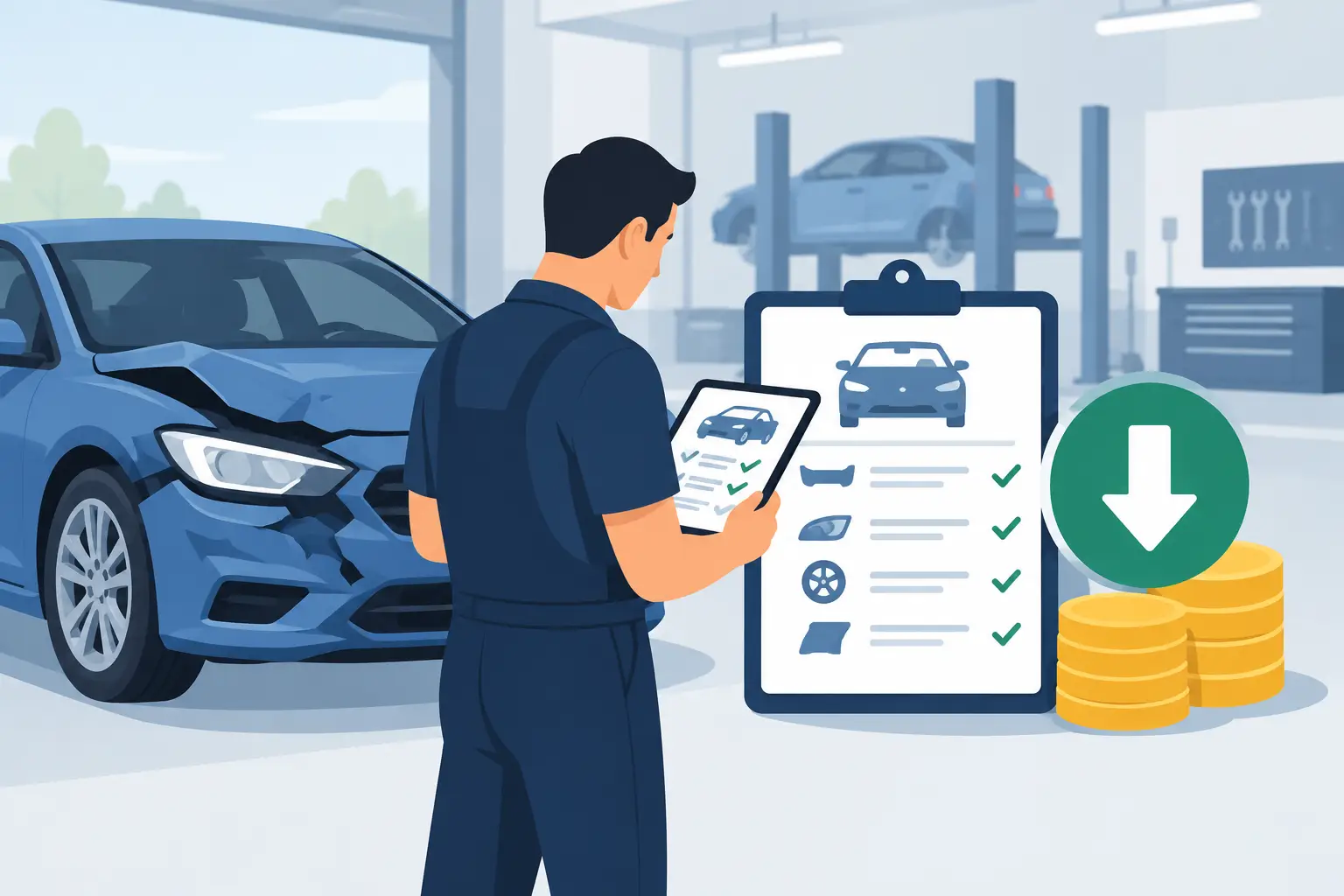
Repair severity trends are no longer a claims-industry statistic that repair operators can leave to insurers and data providers. They are showing up in estimate mix, cycle time, parts procurement, sublet volume, customer-pay exposure, and the capital decisions facing collision centers. A higher average repair order can improve top-line sales, but it can also conceal a less favorable operating reality when labor hours rise faster than available technician capacity or when supplemental activity extends every file.
For repair networks, the central question is not whether severity is increasing. It is which components of severity are rising, whether the increase is recoverable under existing labor and reimbursement arrangements, and how the change affects throughput. The answers vary materially by vehicle mix, market, carrier relationship, repair planning discipline, and access to diagnostics, calibrations, and parts.
Repair Severity Trends Are Not One Metric
Severity is often discussed as average paid claim cost, but that number combines several distinct cost movements. Parts prices, labor rates, repair hours, paint and materials, towing, rental, storage, sublet procedures, and total-loss decisions can all move the final figure. A market can report rising severity even when repairable damage has not become substantially more complex, simply because replacement components or related claim expenses cost more.
That distinction matters at the facility level. A repairer may see a higher average repair order because a greater share of vehicles require bumper covers, lamps, sensors, and front-end structural work. Another may see the same average-order increase because OEM parts have become more expensive and backordered. The first situation may demand additional technical capability and longer blueprinting. The second may primarily create parts-management pressure and customer communication risk.
Vehicle age and repair-versus-total-loss mix add another layer. Older vehicles can produce lower repair orders but reach total-loss thresholds quickly when parts, rental, and hidden damage accumulate. Conversely, late-model vehicles may remain repairable at costs that would once have triggered a total-loss review because their actual cash values are higher. Claim severity therefore has to be read alongside frequency, total-loss rate, average vehicle value, and repairable-claim mix.
For multi-shop operators, averages can be especially misleading. One location may be absorbing a higher concentration of luxury vehicles, EVs, or ADAS-equipped late-model units, while another is handling conventional cosmetic work. Network-level severity may rise while individual locations face very different labor, equipment, and parts requirements.
The Vehicle Is Driving More Operations Into the File
Modern collision repairs increasingly involve systems that were not visible in the traditional panel-and-refinish workflow. Cameras, radar, ultrasonic sensors, steering-angle systems, occupant classification components, battery safety procedures, and advanced lighting assemblies can introduce required operations before a vehicle reaches the paint department and after it leaves it.
The commercial challenge is not simply charging for those operations. It is identifying them early, documenting the repair logic, completing them through qualified internal or sublet resources, and returning the vehicle without creating avoidable delay. A missed pre-repair scan or late discovery of a calibration requirement can turn a seemingly manageable estimate into a stalled production file.
ADAS-related work also changes the cost structure of low-speed losses. Damage that once resulted in a cover repair, grille replacement, and refinish may now involve sensor inspections, mounting verification, scans, aiming procedures, calibration, or module programming. Not every repair needs every operation, and overgeneralizing creates friction with payers. But a repair plan that ignores OEM procedures or vehicle-specific conditions exposes the shop, carrier, and vehicle owner to a more serious risk than an estimate dispute.
EVs produce a similar operational split. Many EV collision repairs remain conventional body, structural, mechanical, and refinish work. Others require high-voltage isolation, battery condition review, thermal-event protocols, specialized transport, or OEM-directed inspections that can materially affect claim cost and cycle time. Shops do not need to build an EV capability around every vehicle entering the market. They do need a clear routing decision: repair internally, use a qualified partner, or decline work outside their documented competence.
Parts Volatility Can Inflate Severity Without Improving Margin
Parts are a primary source of severity growth, yet higher parts dollars rarely translate into healthier repair-center economics on their own. Margin performance depends on procurement execution, delivery reliability, return management, price verification, alternative-parts policy, and the administrative time required to keep the estimate current.
OEM parts are often necessary for fit, function, safety systems, or documented repair procedures. At the same time, higher OEM penetration can increase repair cost and create exposure when supply is constrained. Recycled and aftermarket parts can help control claim cost in appropriate applications, but availability, quality, warranty handling, and insurer requirements differ by market and vehicle. The practical objective is not to favor one source universally. It is to make the right source decision early enough that it does not disrupt production.
Supplements remain the point where poor parts visibility becomes expensive. A supplement caused by concealed damage is a normal feature of collision work. A supplement caused by incomplete disassembly, missed operations, unverified pricing, or delayed parts research is a process failure. As severity rises, the value of disciplined blueprinting rises with it. Every late discovery consumes estimator attention, touches the carrier workflow again, shifts technician sequencing, and makes promised completion dates less credible.
Paint and materials deserve equal attention. More complex repairs, larger vehicles, multi-stage finishes, specialty colors, and blend requirements can raise material consumption faster than legacy reimbursement formulas. Facilities should understand whether their materials methodology reflects actual usage and whether refinish labor, materials, booth capacity, and technician staffing are moving in the same direction. Revenue growth with a constrained paint department can become a throughput problem rather than a margin gain.
Higher Severity Tests Capacity Before It Tests Revenue
A $6,000 repair order may look favorable compared with a $3,500 repair order, but the more useful measure is gross profit and completed repairs per available production hour. High-severity work often contains more non-body dependencies: parts holds, scan scheduling, calibration appointments, mechanical sublets, insurer reviews, and quality-control steps. Those dependencies can leave workstations occupied while little labor is being billed.
This is why production management needs to distinguish touch time from calendar time. A shop can have technicians producing efficiently on the hours they receive and still miss cycle-time targets because vehicles enter production before parts are verified or because calibrations are treated as an end-of-repair task rather than a scheduled capacity requirement.
The staffing issue is equally direct. More repair complexity raises demand for estimators who can write complete plans, technicians who can perform procedure-driven repairs, parts staff who can control exceptions, and quality-control personnel who can verify that required operations were completed. Adding volume without strengthening those functions can amplify supplements, rework, and customer dissatisfaction.
For smaller independents, the response may be specialization rather than full vertical integration. A reliable diagnostic, calibration, mechanical, glass, or EV partner can be economically preferable to purchasing equipment that sits idle. For larger networks, internalizing selected services may improve scheduling control and capture revenue, but only when utilization, training, liability, and geographic coverage support the investment.
Managing Repair Severity Trends in the Shop
The strongest response to rising severity is better repair intelligence at intake. That starts with accurate vehicle identification, early damage assessment, procedure research, pre-repair scanning where applicable, and a parts plan tied to the actual repair sequence. The goal is not a perfect estimate before teardown. It is to reduce avoidable uncertainty before the vehicle consumes scarce production capacity.
Operators should review severity by repair category, not only by total average. Track labor hours, parts dollars, supplement frequency, calibration and diagnostic sublet costs, total-loss conversion, gross profit, cycle time, and customer delivery performance by vehicle age, make, propulsion type, and carrier or referral source where the sample size is meaningful. A rise in average repair order accompanied by declining gross profit or longer keys-to-keys requires a different response than a rise supported by stable touch time and fully recovered operations.
Insurers face their own trade-offs. Pressure to control indemnity cost can encourage greater scrutiny of parts choices and repair operations, while inadequate recognition of documented procedures can increase friction and delay. Repairers that present clear evidence, consistent documentation, and vehicle-specific rationale are better positioned than shops that rely on generic line-item arguments. The productive conversation is about the safe, complete, and efficient repair path, not a debate over whether complexity exists.
Severity will continue to be shaped by vehicle technology, inflation, parts availability, and changing total-loss economics. The repair businesses that benefit will be the ones that turn that complexity into earlier decisions, cleaner production flow, and repair plans their teams can execute with confidence.