






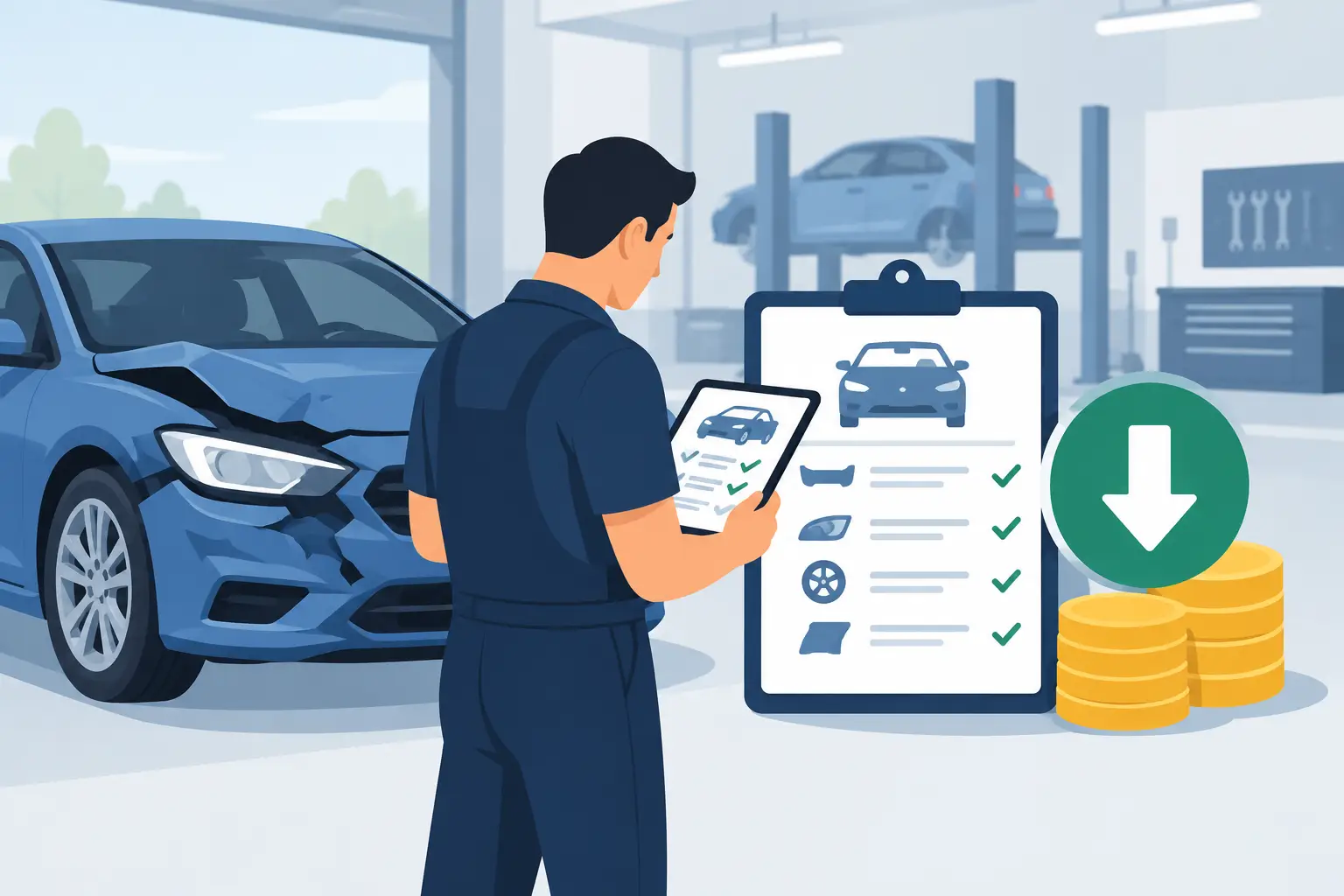



A windshield replacement, front bumper repair, wheel alignment, or minor collision can now create a calibration event with implications far beyond the original labor operation. For repairers, ADAS calibration requirements have become a planning, documentation, and capacity issue as much as a diagnostic one. The shop that treats calibration as a final add-on risks supplements, missed operations, delayed delivery, and a repair file that is difficult to defend.
ADAS Calibration Requirements Start With OEM Procedures
There is no universal calibration rule that applies across makes, models, and model years. A forward-facing camera may require static calibration after windshield replacement on one vehicle, dynamic calibration after a wheel alignment on another, or both procedures after a collision repair. Radar units, surround-view cameras, blind-spot sensors, steering angle sensors, parking systems, and occupant classification systems each carry their own procedural logic.
That makes the OEM repair procedure the controlling document. The repair plan should identify the vehicle’s exact equipment, determine whether an ADAS-related operation has been triggered, and specify the required calibration or initialization process. Year, trim, drivetrain, option package, sensor location, and replacement-part application can all change the answer.
The distinction matters because a dashboard with no warning lamps is not proof that a system is functioning to specification. Many systems can be free of diagnostic trouble codes while still requiring calibration after a component, mounting position, wheel alignment geometry, ride height, or glass installation has changed. A road test alone is not a substitute for an OEM-prescribed calibration.
The Repair Events That Commonly Trigger Calibration
Collision centers increasingly need calibration review embedded in estimating and blueprinting rather than waiting until reassembly. The likely triggers are broader than many repair plans initially reflect.
Windshield replacement is a familiar example, particularly when the windshield-mounted camera supports lane departure warning, lane centering, traffic-sign recognition, or automatic emergency braking. But front-end repairs can also affect radar and camera aiming through bumper cover replacement, grille work, active shutter service, headlamp replacement, radiator support repairs, or structural pulls near sensor mounting points.
Suspension and steering work deserve the same attention. Alignment changes, steering gear replacement, steering angle sensor service, subframe movement, control arm replacement, tire-size changes, and ride-height corrections may require calibration, initialization, or verification. Mechanical shops face the same decision path when performing alignment, chassis, windshield, and driver-assistance-related work.
Other frequent triggers include rear bumper repairs involving blind-spot radar, mirror replacement with integrated cameras or radar indicators, liftgate or rear camera service, battery disconnect procedures on certain vehicles, and diagnostic trouble codes related to ADAS functions. The actual requirement still depends on the OEM procedure, not a generic trigger list. A trigger list is useful for catching opportunities during blueprinting; it is not an authorization to apply a one-size-fits-all labor operation.
Static, Dynamic, and Combined Procedures Change Shop Capacity
Static calibration is performed in a controlled bay using targets, scan tools, measured distances, level floors, controlled lighting, and specified vehicle conditions. Dynamic calibration requires driving the vehicle under OEM-defined road, traffic, speed, and weather conditions. Some vehicles require both.
Static work is where a shop’s facility constraints become visible. Floor levelness, bay length and width, target storage, lighting, wireless connectivity, and the ability to keep other vehicles and technicians out of the calibration area can determine whether a procedure can be completed correctly. A calibration space that is adequate for one manufacturer or tool platform may not satisfy another.
Dynamic procedures have a different bottleneck: time and repeatability. Dense traffic, poor lane markings, rain, road construction, and regional weather can turn a nominally short drive cycle into an unpredictable production delay. Shops that promise same-day delivery without accounting for these variables can create avoidable customer-service pressure near the end of a repair.
The operational question is not whether in-house calibration is always superior to sublet calibration. It is whether the selected path consistently produces an OEM-compliant repair, clear documentation, manageable cycle time, and a margin that supports the investment. High-volume MSOs may justify dedicated equipment, a controlled calibration center, and specialist staffing. A smaller repairer may be better served by a qualified mobile provider or a nearby calibration partner, especially where manufacturer coverage is fragmented.
Estimating and Claims: Make the Need Visible Early
Calibration-related friction often begins when the operation appears late in the repair. By then, parts may be installed, delivery may be scheduled, and the insurer may be reviewing an unfamiliar charge under time pressure.
A defensible estimate connects the calibration operation to the vehicle, the repair event, and the OEM procedure. The file should show which system is equipped on the vehicle, why the repair triggers the procedure, whether the work is static, dynamic, or combined, and whether the operation is performed in-house or sublet. Supporting documentation should be retained according to company policy and applicable requirements.
Pre-repair and post-repair scans remain valuable components of that record, but they do not replace calibration documentation. The final file should also capture the calibration report or successful completion result, relevant diagnostic information, alignment results when applicable, and invoices from outside providers. If a required calibration cannot be completed because of weather, unresolved mechanical issues, unavailable targets, or a failed procedure, the repair order should reflect that status and the next action.
For insurers and repair networks, consistency matters. Variable estimating practices can lead to uneven approvals, avoidable supplements, and disputes over whether a calibration was necessary. Network standards that require OEM research, standardized line-item documentation, and defined escalation for failed calibrations can reduce that variability without forcing every location into the same equipment model.
Parts, Glass, and Alignment Quality Affect the Outcome
Calibration cannot compensate for an incorrectly repaired vehicle. Sensor brackets, bumper reinforcements, windshield positioning, ride height, tire condition, alignment geometry, and structural dimensions must meet the underlying repair requirements before the procedure begins.
This is particularly relevant when replacement parts enter the decision. A component that fits physically may not position a sensor, emblem, camera bracket, or radar cover within OEM tolerance. The same consideration applies to windshields and camera mounting hardware. The correct calibration tool cannot cure optical distortion, incorrect glass application, damaged brackets, or an improperly installed bumper assembly.
Repair sequencing therefore matters. Completing an alignment before a camera calibration may be required on a given vehicle because thrust angle and steering-center conditions affect the result. A calibration failure should prompt a structured diagnosis of vehicle condition, target placement, tool coverage, environmental setup, and prior repair quality. Repeating the same failed process without identifying the cause consumes time and can obscure the real issue.
Building a Repeatable Calibration Workflow
The strongest shops make ADAS review a standard gate in the production process. At intake and blueprint, the team identifies equipped systems and pulls the relevant OEM information. Before repair authorization, the estimator and production team determine likely calibration needs, the execution path, capacity constraints, and documentation requirements.
At reassembly, technicians verify that prerequisite repairs are complete before sending the vehicle to calibration. The final quality-control review confirms that required reports, scans, alignments, and sublet invoices are attached to the file. This workflow should apply whether the calibration is performed by an in-house specialist, a mobile provider, a dealership, or an independent calibration center.
Training cannot be limited to the technician operating the scan tool. Estimators need to recognize common triggers. Parts personnel need awareness of sensor-related component considerations. Production managers need to schedule calibration capacity before delivery dates are committed. Customer-facing staff need a concise explanation when an added procedure affects timing or cost.
The business case is ultimately tied to control. Calibration volume will continue to spread across collision, glass, mechanical, tire, and dealership service operations as ADAS penetration rises. Repairers that build OEM research, proper sequencing, qualified execution, and complete records into normal production discipline will be better positioned to protect repair quality while keeping claims conversations and delivery commitments on firmer ground.