






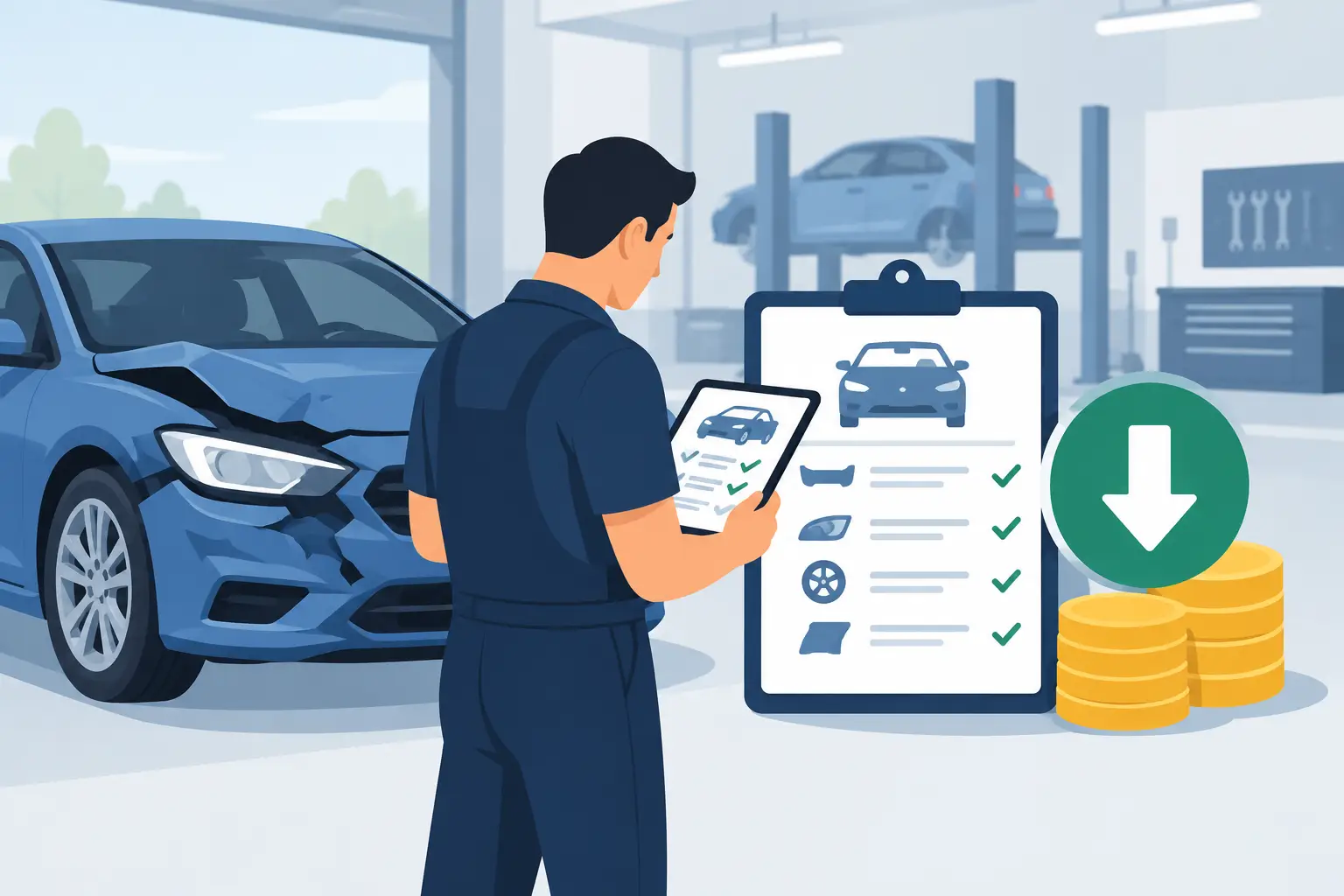


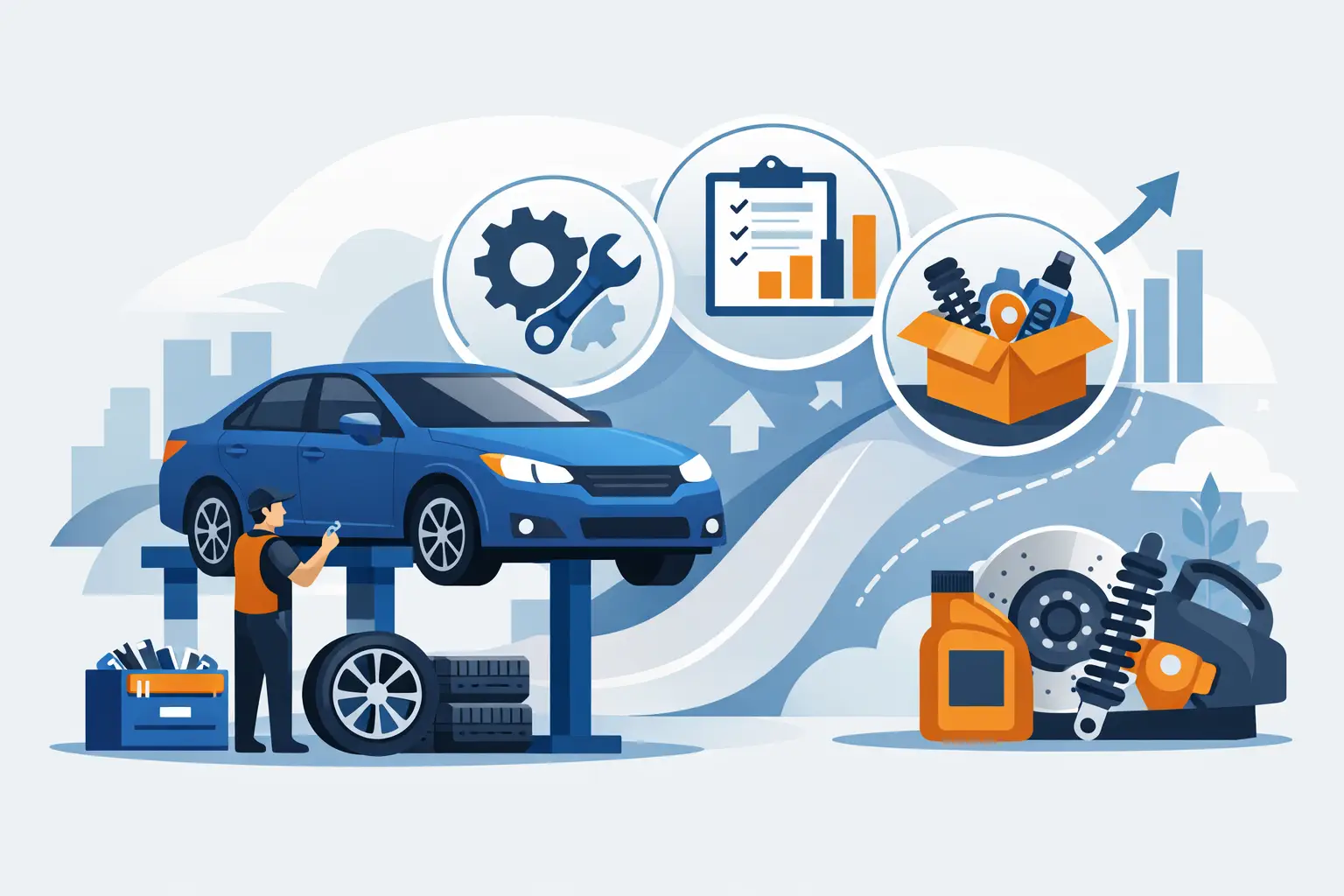
A repair order can still look familiar at the front counter while becoming far less familiar in the bay. A late-model collision repair may require pre- and post-repair scans, ADAS calibration planning, OEM repair-procedure verification, specialized sublet coordination, and closer insurer documentation. On the mechanical side, the same vehicle may carry software-dependent service requirements, electronic parking-brake procedures, and component availability risks that change the estimate after teardown.
That is the central operating reality of the automotive aftermarket in 2026: vehicle complexity is increasing faster than many businesses can standardize their response. The opportunity remains substantial because the North American vehicle fleet is aging, consumers are holding vehicles longer, and repair demand remains essential. But revenue growth alone will not determine who wins. Margin discipline, technical capability, cycle time, and the ability to make sound capital decisions will.
Automotive Aftermarket Growth Is Becoming More Selective
The aftermarket has historically benefited from a broad and durable demand base. Higher new-vehicle prices, elevated financing costs, and the age of the vehicle parc support continued maintenance and repair activity. Yet those tailwinds do not lift every operator equally.
Facilities that can complete increasingly complex work safely and document it correctly are positioned to capture a larger share of available repair dollars. Those that cannot may see work diverted to dealerships, specialty shops, larger networks, or sublet partners. This is particularly visible in collision repair, where the gap between a cosmetic repair and a properly executed structural, electrical, or ADAS-related repair continues to widen.
For independent mechanical shops, the pressure is similar but often arrives through diagnostic workflow. A no-start, drivability, warning-light, or hybrid-system complaint can consume significant technician time before a billable repair is identified. The issue is not simply buying a scan tool. It is establishing a repeatable process for information access, test planning, documentation, authorization, and quality control.
The strategic question for operators is no longer whether technology affects the repair mix. It is which work the business intends to own, which work it will partner out, and how those choices affect gross profit and customer retention.
Capacity Is a Margin Issue, Not Just a Staffing Issue
The technician shortage is often described as a recruiting problem. It is also a throughput problem. Every open position constrains production, but so do poorly designed workflows that leave skilled technicians waiting for parts, repair information, approvals, supplements, or calibration availability.
A shop with full technician headcount can still underperform if its highest-value labor is absorbed by administrative handoffs and avoidable diagnostic uncertainty. Conversely, a facility that has a disciplined blueprinting process, defined parts controls, clear dispatch rules, and reliable sublet relationships may produce more work with the same staffing level.
This makes labor development more commercially urgent. Pay plans matter, but so do career paths, training access, equipment quality, shop culture, and the predictability of the daily workload. Younger technicians entering the trade need to see a profession with technical progression, not a job defined by flat-rate volatility and outdated tools.
For multi-shop operators, standardization can improve capacity, but only if it reflects real shop conditions. Centralized procedures that ignore local insurer mix, technician skill depth, or vendor coverage can add friction rather than remove it. The best operating models establish common controls while allowing facilities to escalate exceptions quickly.
Diagnostics and Calibration Move Into Core Operations
Diagnostic and calibration work has shifted from an occasional specialty service to a central production dependency. Collision centers face growing exposure when ADAS-equipped vehicles require scanning, aiming, programming, or dynamic calibration after repairs. Mechanical shops face an expanding mix of connected modules, software-controlled systems, hybrid components, and manufacturer-specific service procedures.
The in-house versus outsourced decision depends on volume, geography, technician competency, equipment utilization, liability tolerance, and turnaround requirements. Bringing calibration in-house may improve scheduling control and reduce sublet expense, but it creates obligations around training, targets, space, procedure adherence, documentation, and equipment maintenance. Outsourcing may preserve capital and technical focus, but it can introduce scheduling delays that affect cycle time and customer communication.
Neither model is automatically superior. What matters is whether management can measure the full cost of delay. A calibration partner that appears expensive on an invoice may be economical if it protects delivery dates and reduces rework. An in-house setup may look attractive until utilization, training hours, and compliance requirements are included in the calculation.
The same principle applies to remote diagnostics. These services can extend a shop’s technical reach, especially where experienced diagnosticians are difficult to hire. But remote support does not replace sound testing discipline on site. Shops still need capable technicians who can verify conditions, follow test plans, and distinguish a confirmed repair from a cleared code.
Parts Strategy Must Account for Repairability
Parts availability has improved from the most acute disruption periods, but supply-chain risk remains an operating variable. Backorders, supersessions, damaged shipments, incomplete kits, and regional distribution gaps can each turn a planned repair into a stalled vehicle.
Collision repairers also face a more nuanced parts decision than price alone suggests. OEM, aftermarket, recycled, reconditioned, and alternative components may each have a role, depending on insurer requirements, vehicle age, repair procedure, availability, fit, warranty exposure, and customer expectations. The cheapest line item can become the most expensive option when it creates a fitment issue, delays a repair, or conflicts with an OEM procedure.
Recyclers are increasingly relevant to this equation, particularly as repairers seek cost-effective options for aging vehicles and insurers manage severity. Their value is strongest when inventory data, part grading, logistics, and warranty practices reduce uncertainty for the installing shop. Better data exchange between recyclers, estimators, and repair facilities can reduce time spent chasing availability after an estimate is written.
Parts departments and procurement teams should be measured on more than purchase price. Fill rate, return rate, exception handling, days-to-receipt, supplement impact, and technician waiting time reveal whether sourcing practices are supporting production or quietly eroding it.
Claims Economics Are Reshaping Repair Decisions
Insurers, repair networks, and body shops remain tied together by a difficult economic reality: repair costs have risen with labor, parts, vehicle technology, and severity, while customers still expect clear communication and timely delivery. This puts documentation at the center of claims economics.
For repairers, complete repair planning and evidence-based estimating are essential to recovering legitimate costs. For insurers, consistent documentation and credible repair outcomes support claim accuracy and customer confidence. The tension emerges when process requirements create administrative workload without improving repair quality or decision speed.
The most productive relationships are built around shared visibility. When shops communicate likely parts delays, calibration needs, teardown findings, and repair-plan changes early, adjusters and customers have fewer surprises to manage. That does not eliminate disagreement over rates, procedures, or parts choices. It does make those disagreements more fact-based and less likely to consume capacity.
Consolidation adds another dimension. Larger repair platforms, distributors, diagnostic providers, and insurers can gain purchasing leverage and invest in centralized systems. Independents can still compete effectively, but they need a sharper local proposition: technical specialization, superior communication, faster decisions, trusted relationships, or a service niche larger organizations do not execute as well.
EV Service Requires a Deliberate Business Case
Electric vehicle repair is often discussed as an inevitable future category. For many aftermarket businesses, it is already a selective present-day requirement. The key is to avoid treating EV readiness as a binary label.
A facility may be equipped to perform tires, brakes, suspension, HVAC, alignment, and certain routine maintenance on EVs without being prepared for high-voltage battery diagnosis or structural battery damage. Collision operations may need procedures for safe vehicle handling, battery assessment, storage, isolation, and escalation to qualified partners even when they do not perform battery repairs internally.
Training and safety controls should follow the actual work mix, not speculation. Investing ahead of demand can be prudent in markets with significant EV adoption, fleet concentration, or dealer referral opportunity. In other markets, partnership arrangements and a staged training plan may offer a better return. The operational mistake is assuming that conventional processes remain sufficient until EV volume becomes impossible to ignore.
The Practical Advantage Is Better Decision Quality
The automotive aftermarket does not lack demand, technology, or investment activity. It lacks a simple operating model. Businesses are being asked to make interconnected decisions about labor, tools, training, parts, data access, calibration, insurer relationships, and service mix, often while maintaining daily production.
Leaders should treat those decisions as portfolio choices rather than isolated purchases. A new diagnostic platform changes staffing needs. A calibration investment changes scheduling and liability controls. A new parts supplier changes return processes and cycle-time exposure. Each decision should have an owner, a measurable operating objective, and a review point after implementation.
The businesses that create durable advantage will not be the ones that chase every new capability. They will be the ones that know where complexity is costing them money, build the right internal discipline around it, and make customers and partners feel the difference in every completed repair.