



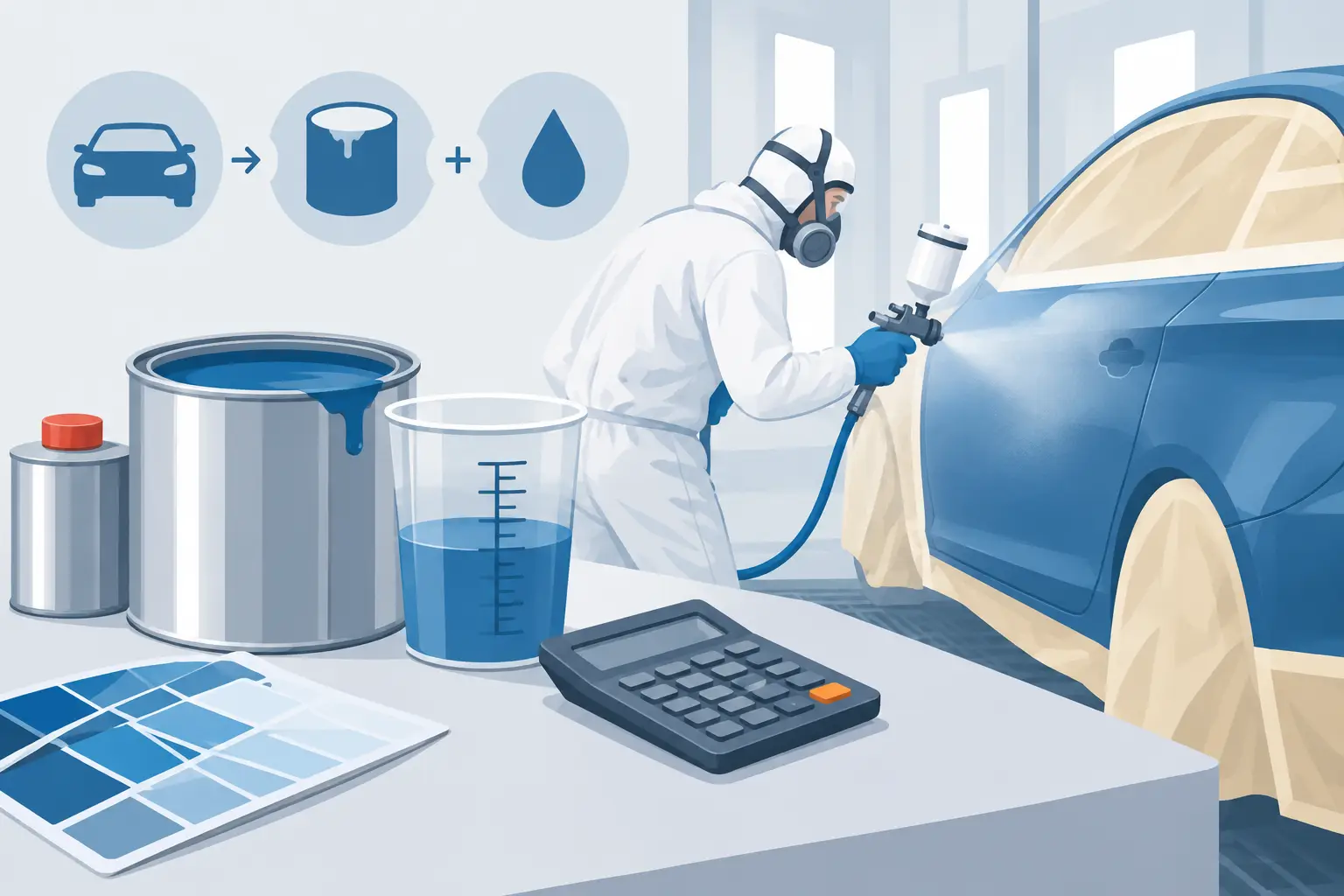


A paint department can look busy all day and still be the constraint holding back a collision center’s gross profit. Vehicles wait for masking, color verification, booth access, cure time, denib and polish, or a correction that should not have been necessary. That is why refinish technology has become a broader operating conversation than spray guns, coatings, and booth hardware. For repairers, it now touches cycle time, technician utilization, energy use, supplement control, compliance, and the ability to accept increasingly complex vehicle work.
Refinish Technology Is Becoming a Capacity Strategy
The traditional purchasing case for refinish equipment focused on finish quality. Finish quality remains nonnegotiable, particularly as OEM colors become more complex and customer expectations remain high. But shop operators are increasingly evaluating investments through a different question: does this change the number of repair orders the facility can complete profitably each week?
That shift puts more scrutiny on every minute surrounding the spray event. A faster-curing product has limited value if vehicles still queue for prep, if the booth is used as a storage bay, or if the painter spends too much time searching for a variant. Conversely, a disciplined process can leave value on the table when aging equipment creates excess flash time, uneven airflow, avoidable rework, or high utility costs.
For multi-shop operators, the issue is also standardization. A common mix-room workflow, color process, documentation standard, and training framework make performance more measurable across locations. The goal is not to make every paint department identical. Building layouts, local labor markets, DRP mix, and vehicle age vary. The goal is to reduce process variation that does not improve repair quality.
Digital Color Matching Moves Upstream
Digital color tools are among the most visible changes in the refinish department. Spectrophotometers, connected color retrieval systems, formulation software, and digital spray-out records can reduce the time needed to identify a workable formula and improve first-pass match rates. They matter most where the traditional process depends heavily on the memory and judgment of a small number of experienced painters.
Better Data Does Not Eliminate the Spray-Out
A reading from a device is an input, not a guarantee. Metallic orientation, substrate condition, panel angle, blend technique, repair area size, lighting, and application settings still influence the final result. Shops that treat digital color matching as a replacement for spray-outs can create costly expectations for estimators, production managers, and customers.
The operational advantage is more practical. Digital records can give painters a starting point faster, preserve knowledge when staff changes, and make repeat repairs less dependent on one technician’s personal files. In a market where skilled refinish labor remains difficult to replace, that institutional knowledge has value beyond the individual repair.
Color technology also has estimating implications. More consistent identification of variants and blend requirements can support clearer repair planning. It will not end disputes over necessary operations, but it can improve the shop’s internal evidence trail when a repair requires additional materials, blend panels, or labor that were not apparent during an initial estimate.
Cure Speed Must Be Evaluated at the System Level
Low-bake coatings, UV-curable materials, infrared systems, and improved booth control promise faster processing. Some can create material gains, especially in high-volume facilities where booth minutes are closely managed. The return, however, depends on the entire workflow.
A shop considering accelerated curing should measure its actual constraint first. If the booth is consistently full, reducing cure time may open meaningful capacity. If vehicles wait several hours for teardown approval, parts, or technician availability before they ever reach paint, a major booth upgrade may produce a weaker return than better scheduling or a prep-deck investment.
There are technical trade-offs as well. UV systems require appropriate exposure geometry and technician discipline. Infrared performance depends on panel access, substrate, and process control. Faster products may require tighter management of pot life, application windows, and training. A product line that performs well in a manufacturer demonstration may require process changes that a shop has not budgeted in labor or downtime.
The useful metric is not simply booth cycle time. Operators should track touch time, queue time before paint, booth occupancy, rework rate, paint material cost per repair order, and elapsed hours from body completion to delivery. Those measures show whether the investment is removing a bottleneck or merely shifting it elsewhere.
Automation Has Limits in the Paint Department
Automation is entering refinish operations through connected mixing systems, scale integration, inventory controls, automated dispensing, booth monitoring, and workflow software. These systems can improve material accuracy and reduce waste. They can also provide managers with cleaner reporting on usage by job, technician, insurer, vehicle segment, or location.
Automated paint mixing is particularly attractive where material loss and poor inventory visibility are persistent concerns. Accurate dispensing can reduce overmixing, help enforce approved product use, and simplify purchasing decisions. At scale, those improvements can be more financially significant than a headline reduction in minutes per repair.
Still, automation does not cure a weak process. A connected scale cannot correct a poor repair plan. A dispensing system cannot resolve unapproved shortcuts in substrate preparation. Shop leadership should resist buying data systems before establishing who will review the data, how exceptions will be handled, and which operating decisions will change as a result.
The best deployments make technicians’ work easier rather than adding duplicate entries or creating another screen to manage. If painters view a system as surveillance or administrative friction, adoption will lag and the data will be incomplete. Involving the paint team in workflow design is not a soft management exercise. It is necessary for a reliable return.
Compliance and Energy Costs Are Part of the Investment Case
Environmental compliance is not separate from refinish strategy. VOC rules, hazardous waste practices, ventilation performance, recordkeeping, and chemical storage create direct obligations and operating risk. Requirements vary by jurisdiction, and operators with facilities across states may face different enforcement priorities and permitting conditions.
Technology can help through lower-VOC product systems, controlled mixing, digital documentation, and more efficient booth operation. Yet a compliance claim should be reviewed against local rules and the facility’s actual equipment configuration. A product’s technical data sheet does not replace a shop’s responsibility to maintain its booth, protect employees, manage waste streams, and follow applicable air-quality requirements.
Energy is another variable receiving more attention. Spray booths, compressed air, makeup air units, and curing equipment can materially affect utility expenses. Modern controls and maintenance programs may reduce energy use, but savings depend on run hours, climate, equipment condition, and local utility rates. A facility in a cold-weather market may see a very different payback profile from a shop operating in a warmer region.
For owners planning capital projects, the stronger business case combines production capacity, repair quality, compliance exposure, maintenance needs, and energy performance. A single metric rarely captures the decision.
Workforce Development Will Determine the Payoff
Refinish technology is changing the painter’s job, not eliminating it. The department still requires judgment in color, surface preparation, blending, application, and final inspection. What is changing is the mix of competencies. Painters and helpers increasingly need comfort with software, electronic documentation, material controls, and equipment-specific procedures alongside core finishing skills.
That raises a practical training question. A supplier-led launch session may be enough to introduce a new product, but it is rarely enough to establish repeatable performance across shifts and locations. Shops need defined standards for spray-outs, blend decisions, booth setup, cure verification, defect handling, and material charging. They also need a way to coach those standards without turning every correction into a blame exercise.
The strongest operators make paint performance visible. They review rework causes, track booth utilization, compare material usage to repair mix, and connect findings to scheduling and repair planning. That approach gives painters evidence that technology is intended to support quality and capacity, not simply pressure them to move faster.
What Shop Leaders Should Test Before Buying
Before committing capital or converting product systems, operators should run a controlled evaluation under normal production conditions. Measure baseline throughput, material use, rework, utility consumption where available, and technician time. Include the training hours, implementation disruption, maintenance requirements, software subscriptions, and consumable changes in the financial model.
It also helps to separate manufacturer capability from shop capability. A system may be technically capable of a faster cycle, but the shop may need different staging rules, more prep capacity, revised estimating practices, or an additional helper to realize it. Those supporting changes should be treated as part of the investment, not surprises after installation.
The most productive next step is usually a focused bottleneck review: follow several repair orders from body completion through final delivery, record every wait, and ask which delays technology can realistically remove. That exercise gives refinish leaders a clearer basis for investing where it will protect quality, improve throughput, and strengthen margin.