






In the rapidly evolving collision repair and automotive management landscape, success is no longer dictated solely by the technical calibration of tools, the efficiency of an assembly line, or the integration of sophisticated shop management software. While artificial intelligence, automated estimation platforms, and advanced driver-assistance systems (ADAS) diagnostics have fundamentally rewritten the operational rulebook, the human element remains the ultimate differentiator.
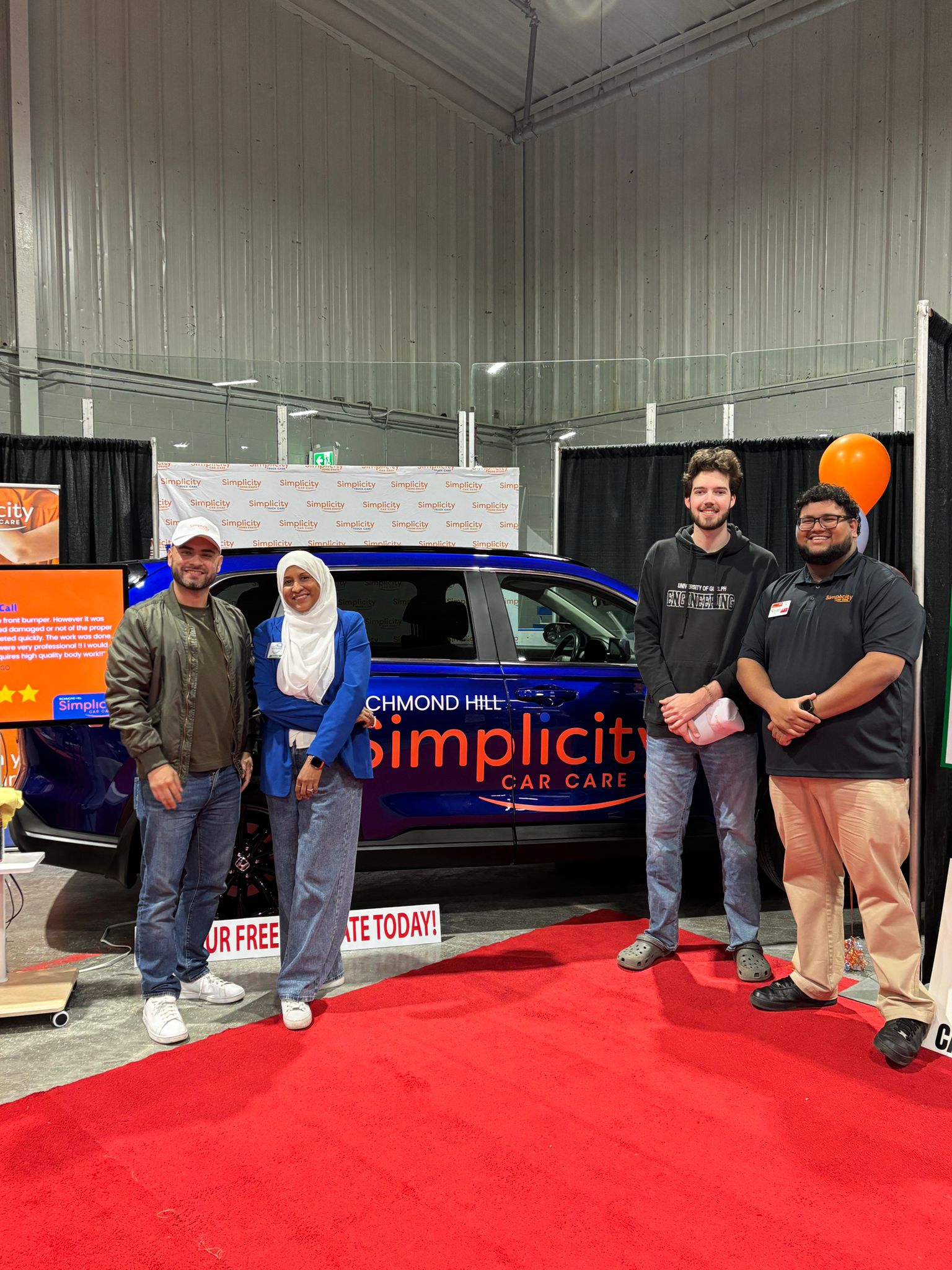
A prime example of this duality—where operational structure meets localized, human-centric leadership—unfolded recently at the annual Discover Georgina Show. Simplicity Car Care Richmond Hill franchise partners Ravmat Rahim (known warmly to the community as Ray) and Zaheeda captured industry attention by acting as featured exhibitors at the weekend-long event.
What makes their participation unique from an automotive management perspective is a compelling geographic and operational dynamic: while Ray and Zaheeda successfully operate their MSO (Multi-Shop Operator) style franchise facility in Richmond Hill, Ontario, they call the Town of Georgina home. By deliberately stepping outside their immediate shop radius to engage directly with their residential neighbors, this duo illustrated an essential philosophy gaining traction across North America’s collision repair networks: community involvement knows no distance, and trust is entirely portable.
The Evolution of Modern Bodyshop Trust
Historically, the independent collision repair shop relied heavily on a fixed geographic footprint. Drivers chose a repair facility based almost entirely on proximity or a direct recommendation from a local insurance agent. However, as the industry consolidates into highly structured franchise networks, the consumer psychology underlying vehicle repair has shifted.
According to Simplicity Car Care leadership, the modern automotive market requires a transition from transactional interactions to relationship-driven ecosystems. Consumers today are highly informed, digitally empowered, and inherently skeptical. When selecting a collision network, they are not merely purchasing a technical service or an automated scratch repair; they are investing in the character, transparency, and integrity of the team executing the work.
Traditional Collision Model          Modern Network Franchise Model
┌───────────────────────────┐        ┌───────────────────────────┐
│ • Geographic Dependency   │        │ • Portability of Trust    │
│ • Transactional Repairs   │  ───>  │ • Relationship Ecosystems │
│ • Isolated Footprint      │        │ • Community Advocacy      │
└───────────────────────────┘        └───────────────────────────┘
The concept of the Portability of Trust posits that an exceptional service reputation can transcend rigid geographic borders. When a franchise partner establishes operational excellence and local visibility, that brand equity travels with them. Ray and Zaheeda’s presence at the Discover Georgina Show proved that a business owner’s local reputation can seamlessly funnel consumer confidence back to an operational facility located miles away in Richmond Hill.
Decentralized Marketing and Local Advocacy
For senior shop managers, independent operators, and multi-location executives, Ray and Zaheeda’s deployment strategy offers a critical masterclass in decentralized marketing. In an era where digital ad spend is subject to diminishing returns and algorithmic volatility, grassroots community alignment offers a highly stable, high-yield alternative.
“Working passionately to enrich both the community where you work and the community where you live is a true masterclass in local leadership,” notes Domenic Ieraci, CEO of Simplicity Car Care. “They embody our core network values, and we are incredibly proud to have them in the Simplicity family.”
By bridging the space between where they earn their livelihood and where they build their personal lives, these franchise partners have tapped into a deep reservoir of organic consumer loyalty. The overwhelming local support generated during the exhibition weekend demonstrates a reciprocal market force: when automotive business owners genuinely show up for their communities, consumers will actively go the extra mile to support that business, bypassing closer alternatives to patronize a brand they trust.
Scaling Through Systemization and Human Capital
Founded in 2017, Simplicity Car Care has aggressively scaled to become one of Canada’s fastest-growing collision repair networks, boasting over 100 locations across the country. The bedrock of this rapid North American expansion relies on balancing standardized corporate systems with the localized autonomy of its franchise partners.
                     ┌─────────────────────────────┐
                     │  Simplicity Car Care HQ     │
                     │  • Standardized Systems      │
                     │  • Strategic Scalability    │
                     └──────────────┬──────────────┘
                                    │
                                    ▼
                     ┌─────────────────────────────┐
                     │ Local Franchise Partners    │
                     │  • Consumer Trust           │
                     │  • Community Engagement     │
                     └─────────────────────────────┘
From an operational perspective, the value proposition of a collision network lies in its ability to handle backend friction—such as insurance direct repair programs (DRPs), centralized procurement, KPI tracking, and standard operating procedures (SOPs)—so that operators can focus heavily on consumer touchpoints. When corporate infrastructure handles macro operational complexities, shop leaders are freed to act as pillars of client advocacy and neighborhood engagement.
This operational culture effectively splits the responsibilities of the modern bodyshop:
- The Corporate Network: Mandates operational excellence, develops robust franchise support systems, and charts strategic market growth.
- The Franchise Partner: Nurtures the human connection, driving local brand awareness, transparent communication, and community faith.
The Future of Shop Operations: Merging Tech with Touch
As our industry looks toward an increasingly automated future—where AI tools optimize cycle times, manage touchless estimations, and predict parts delays—the narrative surrounding Ray, Zaheeda, and the Simplicity Car Care network serves as an important strategic anchor. Technology should never replace the human relationship; rather, it must act as the engine that gives professionals more time to cultivate it.
The collision facilities that thrive in the coming decade will be those that view trust not as a static, local attribute, but as a portable asset that can be cultivated through deliberate, authentic engagement. By prioritizing a People First approach, forward-thinking automotive operators can insulate their businesses from market disruptions, secure long-term client retention, and prove that authentic local leadership remains the most powerful growth mechanism in collision repair management.