







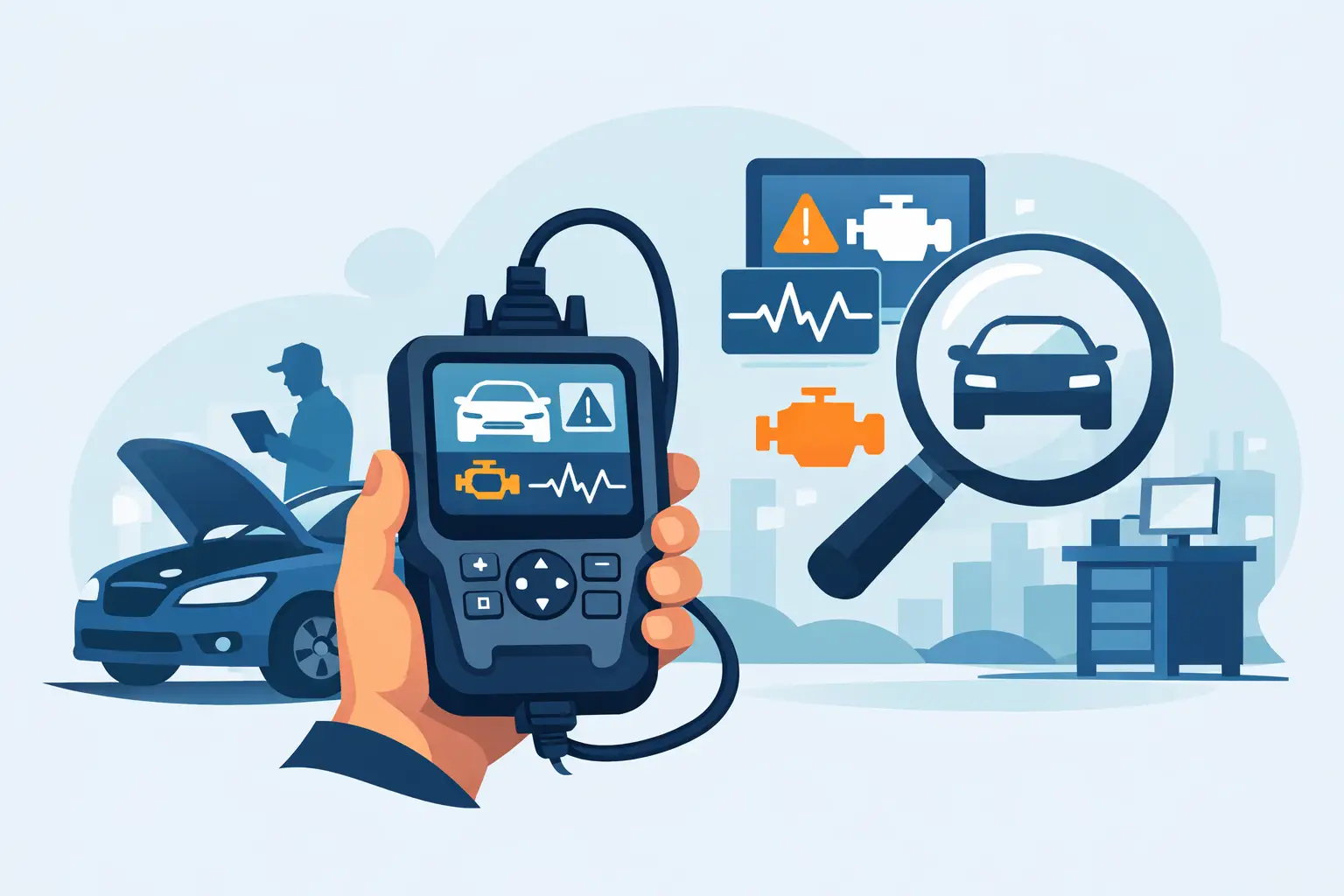
A scan tool purchase is rarely just a tool purchase anymore. For a collision center, mechanical shop, dealer service department, or multi-shop operator, it is a decision about diagnostic capacity, documentation, technician workflow, cybersecurity exposure, and recurring expense. A useful scan tool review must therefore go beyond the number of makes covered or the size of the screen. The question is whether the platform improves repair certainty and cycle time without creating a new bottleneck in the bay or back office.
As vehicle architectures become more software-defined, general-purpose aftermarket tools, OEM applications, remote diagnostic providers, and calibration partners are all competing for a place in the repair process. The right choice depends on the shop’s car parc, repair mix, staffing depth, insurer requirements, and tolerance for subscriptions. There is no universal winner, but there is a disciplined way to assess the options.
Start the Scan Tool Review With Repair Mix
Coverage claims can look similar on a specification sheet while producing very different results on actual repair orders. A mechanical repair facility servicing high-volume domestic and Asian vehicles may prioritize fast module access, guided tests, service resets, bidirectional controls, and dependable topology views. A collision operation needs to look harder at pre-scan and post-scan reporting, ADAS-related fault handling, network health checks, and the ability to identify when OEM procedures or an external diagnostic partner are required.
The first test should be historical, not hypothetical. Pull a representative sample of recent repair orders, ideally 30 to 60, and identify the vehicles that generated diagnostic delays, sublet expense, repeat visits, or documentation disputes. Include late-model EVs and hybrids, vehicles with camera, radar, or steering-angle work, and brands that are common in the local market. A platform that performs well on generic 2016 sedans but fails to provide useful access on the shop’s frequent 2023-2025 models is not economical, regardless of its upfront price.
For multi-shop operators, the analysis should be location-specific. One store may need broad mechanical coverage, while another is handling luxury collision work or a heavier share of EV-related procedures. Standardization can lower training and procurement costs, but forcing every facility into a single tool category can increase escalations and remote-support usage.
Coverage Is Not the Same as Capability
Many scan tools can retrieve diagnostic trouble codes. The operating difference appears when the technician must act on the information. Shops should evaluate whether the tool supports reliable live data, active tests, adaptations, coding where appropriate, guided diagnostic content, and clear module identification. They should also examine how the platform distinguishes a stored historical code from an active fault that affects safe return to service.
Bidirectional control deserves particular attention. Commanding components and running functional tests can reduce diagnostic time when the application is accurate and well supported. But a shop should not assume that a listed function works equally across model years, trim levels, powertrains, and regional configurations. Demonstrations should use actual VINs from the facility’s recent workload.
The same caution applies to advanced functions. A scan tool may advertise battery registration, throttle relearn, steering-angle reset, ABS service procedures, or ADAS support. The practical question is whether the workflow is complete, documented, and usable by the technician assigned to the repair. If the operation still requires an OEM application, a static calibration target setup, a dynamic drive cycle, or an outside provider, that should be reflected in the cost and scheduling model.
Workflow and Documentation Carry Financial Weight
Diagnostic speed is not simply the time between plugging in the VCI and reading codes. It includes device login, vehicle identification, wireless connection reliability, report creation, technician notes, estimate attachment, customer authorization, and final invoice support. A tool that saves three minutes on code retrieval but requires manual screenshots and repeated data entry may not improve total throughput.
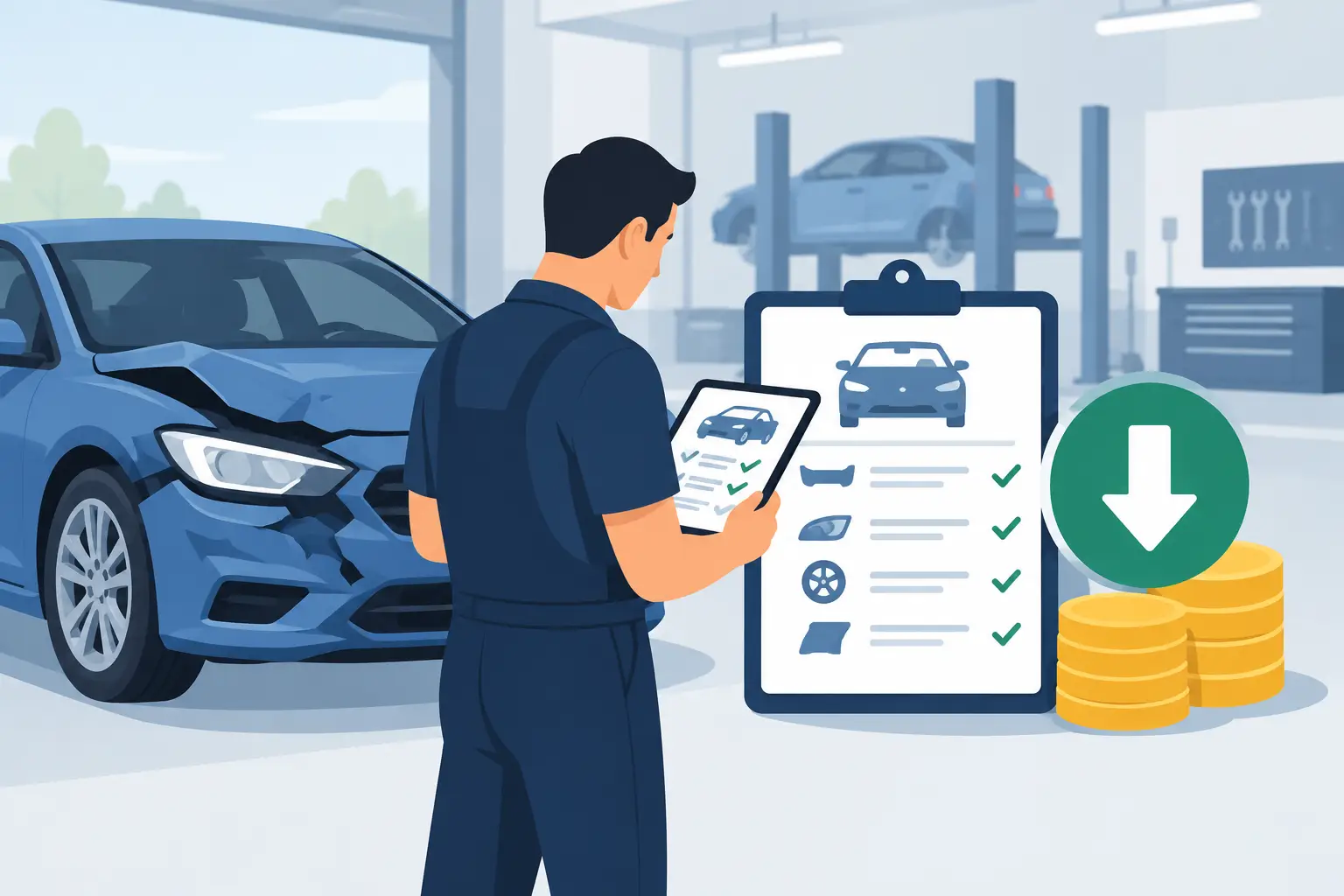
Collision operators should test report quality with insurers, customers, and internal quality-control teams in mind. Can the system produce a time-stamped pre-scan and post-scan report that identifies the vehicle, modules queried, codes found, and codes cleared or remaining? Can the report be attached to the repair file without reformatting? Is the language clear enough for an estimator to use in a supplement discussion while remaining technically credible?
Mechanical shops face a related issue with service advisors. Diagnostic findings need to move from the technician’s device into a recommendation that supports authorization. A platform with usable inspection images, data captures, or report exports can help, but only if advisors are trained to translate results without overstating what a code means. A fault code identifies a system condition. It is not always a diagnosis or a parts order.
Subscription Cost Must Be Measured Against Escalation Cost
The purchase price of a scan tool is increasingly the smallest line item. Annual software renewals, OEM gateway access, cloud services, remote assistance, additional VCIs, replacement tablets, training, and calibration equipment can materially change the ownership cost over three to five years.
A low-cost platform may be appropriate for basic maintenance and inspection work, especially in a small shop with a predictable vehicle mix. It becomes less attractive when technicians routinely lose time to unsupported functions or when service advisors must send vehicles elsewhere for relatively common procedures. Conversely, the most expensive package can be difficult to justify if its advanced capabilities are used only a few times each month.
Operators should separate work that can be completed in-house from work that should be intentionally routed to an OEM tool, remote service provider, or calibration specialist. That is not a failure of the aftermarket tool. It is capacity planning. The objective is to establish a repeatable decision path that protects repair quality and prevents a technician from spending an unbilled hour attempting to force access to an OEM-restricted function.
Security, Access, and Support Are Operating Requirements
Secure gateway systems have made account management a shop-level issue. Before standardizing a platform, leadership should understand who owns credentials, how technicians are authorized, whether access follows an employee or a location, and what happens when a technician leaves. Shared passwords may feel expedient, but they create accountability and security problems when a tool is making changes to vehicle systems.
Internet dependency should be tested under real shop conditions. Wireless dead zones, crowded networks, weak mobile service, and software updates at inconvenient times can interrupt a diagnostic event. Facilities need a clear policy for device updates, charging, physical security, and backup connectivity. This is especially relevant for shops that depend on one high-use scan tool across multiple bays.
Vendor support also deserves a practical test. Ask for response expectations, escalation procedures, warranty terms, and training options. A capable technician should not need vendor support for every repair, but a responsive support channel can prevent a difficult vehicle from consuming a full day of production. For MSOs, reporting on tool utilization, subscription status, and software version control may be as valuable as the tool’s features at the point of use.
Build a Pilot Around Measurable Outcomes
The most defensible procurement process is a structured pilot. Run two or three candidate platforms on the same set of vehicles when possible, with technicians documenting successful functions, time to connect, time to report, missing coverage, and escalation needs. Avoid judging the tool after one easy repair or one outlier vehicle.
Track whether the platform changes labor capture, sublet spending, supplement timing, comeback risk, and technician confidence. In collision repair, also track whether pre- and post-repair scans are completed consistently rather than only when a warning light is visible. Consistency matters because network faults, lost calibrations, and module communication issues do not always announce themselves on the instrument panel.
A scan tool should be treated as part of the shop’s diagnostic operating system, not as an isolated piece of hardware. The best investment is the one that fits the vehicle mix, supports documented procedures, gives technicians usable information, and creates a clear route for the work it cannot complete. That discipline will matter more as software access and vehicle complexity continue to reshape repair capacity.