Claims Economics
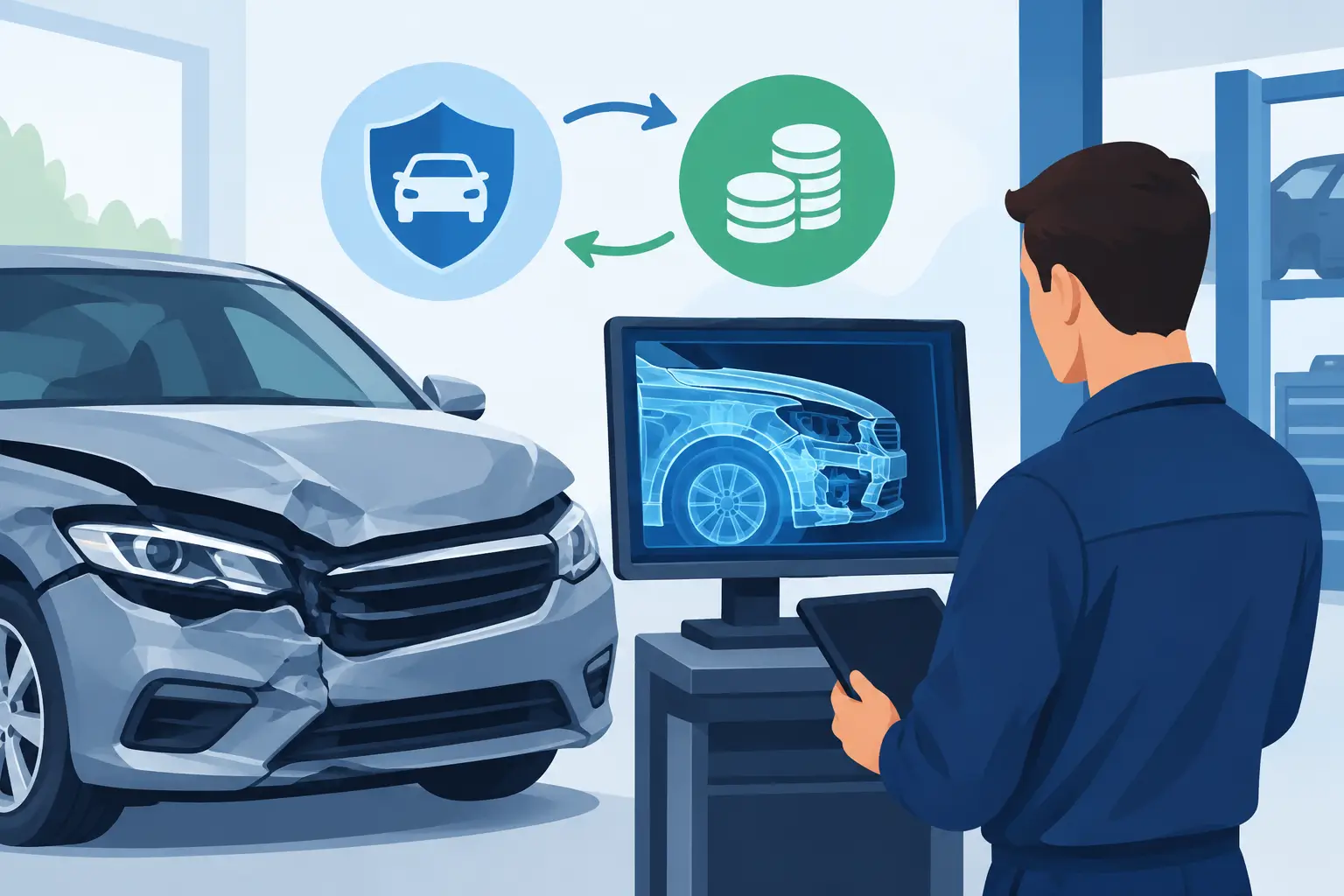
The question of who pays post repair scans is no longer a minor estimating dispute. On late-model vehicles, a documented post-repair scan can be part of validating that a collision repair did not leave diagnostic trouble codes, communication faults, or system issues unresolved. Yet the payer remains contested because the scan may be required by an OEM procedure, expected by the repairer’s quality process, questioned by the carrier, or treated as an unreimbursed administrative cost if the file is poorly documented.
For collision operators, the practical answer is not simply “the insurer” or “the customer.” Payment responsibility is shaped by the repair contract, the applicable policy, state claims requirements, the documented repair plan, and the evidence connecting the scan to the vehicle and loss. Shops that treat post-repair scanning as a repeatable claims workflow, rather than a line item added at delivery, are better positioned to protect both repair quality and gross profit.
Who Pays Post Repair Scans? The Short Answer
In a covered collision claim, the insurer should generally pay reasonable and necessary operations required to return the vehicle to its pre-loss condition under the terms of the policy. If a post-repair scan is called for by the vehicle manufacturer, is necessary based on damage or repair operations, or identifies issues requiring further diagnosis, it has a stronger basis for inclusion in the claim.
That does not mean every scan will be paid automatically. Carriers may challenge the operation when an estimate lacks a causal explanation, when the scan invoice does not identify the vehicle and results, or when the repairer cannot distinguish a post-repair validation scan from a broad shop policy. The payer can also shift to the customer if the insurer denies the charge and the repair authorization makes the customer responsible for non-covered repair operations.
That distinction matters. A repair facility’s agreement is typically with the vehicle owner, while the carrier’s payment obligation is governed by its contract with the insured and applicable claims rules. Shops should avoid representing that an insurer has approved a charge until approval is documented. They should also make sure customer authorizations clearly address supplements, diagnostics, calibrations, and insurer-denied items.
The Business Case Is Stronger Than “We Always Scan”
A blanket statement that every vehicle receives a post-repair scan may support an internal quality-control standard, but it is rarely persuasive by itself in a claims negotiation. The strongest file explains why this vehicle needed this operation after these repairs.
A post-repair scan may be needed to confirm that diagnostic trouble codes generated during the collision or repair process have been addressed. It may identify a communication issue after component replacement, battery disconnects, wiring repair, module programming, or structural work. It can also provide a record that the vehicle was evaluated before release, particularly where advanced driver-assistance systems, restraint systems, networked modules, or electrified powertrain components are involved.
The distinction between scanning and calibration should remain clear. A scan reads vehicle modules and diagnostic information. Calibration is a separate procedure that may be required after certain repairs, alignments, component replacements, or changes to vehicle geometry. A clean scan does not prove that a required calibration was performed, and a calibration invoice does not replace documentation of diagnostic findings. Combining these operations into a single vague line item invites delay and payment friction.
Build the File Before the Negotiation Starts
The estimating team, diagnostic provider, technician, and production manager all influence whether a post-repair scan is recoverable. By the time the vehicle reaches delivery, the supporting record should already be assembled.
A defensible file generally includes the OEM procedure or repair information that supports the scan when applicable, the estimate line item and labor entry, and the scan report tied to the VIN. It should also identify the date, mileage, tool or provider, diagnostic results, and any follow-up steps prompted by findings. If the shop sublets the operation, the sublet invoice should align with the estimate description and supplement amount.
Repairers should preserve both the pre-repair and post-repair reports when both are performed. The two reports serve different purposes. A pre-repair scan can help establish collision-related codes, guide the blueprint, and identify operations that may be needed. A post-repair scan helps validate the completed repair and can reveal codes introduced or remaining after work is performed. Treating one report as a substitute for the other can weaken the repair story.
Photos, parts documentation, alignment records, wiring repair notes, and calibration results can provide the connective tissue between collision damage and diagnostic operations. This is particularly useful when a carrier asserts that a code is pre-existing or unrelated. The shop does not need to claim that every code is loss-related. It needs to show that the vehicle was evaluated appropriately and that any additional repair recommendation was handled through a documented decision process.
Common Carrier Objections and Better Responses
The most frequent objection is that the scan is not included in a database estimate. That may be true, but it is not a complete analysis of whether the operation is necessary. Estimating systems are tools for constructing repair plans, not universal repair procedures. The response should center on the applicable manufacturer information, vehicle condition, and actual work performed.
Another objection is that no diagnostic trouble codes were found. A no-code result can still be valuable when the procedure was required to validate the completed repair. The result is not evidence that the operation lacked value. It is evidence of what the operation found. Still, repairers should not overstate this position: if no OEM procedure, damage-related reason, or repair-process trigger supports the scan, recovery becomes more difficult.
Carriers may also question the price. Shops should be prepared to explain whether the charge reflects an in-house scan, a remote diagnostic session, a mobile provider, or dealer support. A $40 internal scan and a higher-cost sublet operation involving OEM tooling, programming support, or diagnostic consultation are not equivalent services. Itemized invoices and consistent pricing policies reduce the appearance of opportunistic billing.
Finally, insurers may argue that scanning is included in labor rates or overhead. The answer depends on local market practice, contractual arrangements, applicable regulations, and the shop’s documented charge structure. A facility that separately pays for diagnostic tools, subscriptions, technician training, and third-party support has a legitimate cost basis, but cost alone does not establish claim necessity. The repair rationale remains the central issue.
Set a Workflow That Protects Throughput
Post-repair scanning often becomes a margin problem because it is performed late, discovered late, and billed late. A better process assigns ownership at blueprint and again at final quality control. The estimator identifies procedure research requirements, the technician records repair actions that trigger diagnostic validation, and the production team ensures the scan is completed before a delivery promise is made.
Multi-shop operators should standardize coding, invoice capture, scan-report retention, and escalation rules across locations. Without common definitions, one store may write a documented diagnostic operation while another buries it in a generic sublet line. That inconsistency makes carrier discussions harder and prevents leadership from seeing recovery rates, vendor costs, cycle-time effects, and missed revenue by location.
Track the operation as its own category. Monitor frequency by vehicle make, insurer, repair severity, scan vendor, approval status, and denial reason. The objective is not to create a scorecard that pressures teams to scan indiscriminately. It is to identify where documentation fails, which payer rules are creating friction, and whether in-house capability or an outsourced model produces better economics.
Customer Communication Cannot Be an Afterthought
Customers should hear about diagnostic validation before the final bill is presented. Explain that modern vehicles contain multiple electronic systems and that required scans, programming, or calibrations may be necessary as repairs progress. Explain separately that the insurer makes coverage decisions, while the shop must follow appropriate repair procedures.
That conversation is especially important when an insurer disputes a scan or when additional findings require a supplement. A transparent authorization process reduces the chance that the repairer is forced to choose between releasing a vehicle without completing a supported operation and absorbing a legitimate expense to preserve the customer relationship.
The operational goal is not to win every line-item argument. It is to make the post-repair scan an expected, traceable part of a technically sound repair process. Shops that can connect procedure, proof, price, and customer communication will have a far stronger position as vehicle diagnostics continue to move from specialty work to routine collision-repair infrastructure.